
📌 Key Takeaways
Time-Related Requirements May Be More Complex Than Expected: Many retaliation protections in New Jersey include timeframes that can be shorter or more involved than individuals anticipate. These requirements vary based on the specific nature of the concern and applicable legal pathway, making early awareness of timing considerations particularly relevant.
Proximity Between Events Carries Legal Significance: Under New Jersey’s anti-retaliation protections, the temporal relationship between protected activity—such as raising race-related concerns—and adverse employment actions can be legally significant when evaluating whether conduct might constitute retaliation.
Evidence and Records Change Over Time: Contemporaneous workplace documentation, including performance reviews, emails, and internal communications, may become more difficult to locate or reconstruct as time passes. Memories of specific events can also fade, affecting the evidentiary picture.
Legal Assessment Depends on Individual Circumstances: Legal protections depend on precise factual determinations that require professional legal judgment. Many individuals consult a qualified New Jersey employment attorney soon after concerns arise because such assessment can help clarify whether specific circumstances might fall within recognized anti-retaliation frameworks.
This content examines why timing matters in New Jersey workplace retaliation concerns, providing general information about time-sensitive considerations and the role of prompt legal consultation in understanding individual situations. This content is for informational purposes only and does not constitute legal advice. Consultation with a qualified New Jersey employment attorney is necessary for advice specific to individual circumstances.
Time-related considerations play a significant role in New Jersey workplace retaliation concerns. Under New Jersey’s anti-retaliation protections, the timing between protected activity—such as raising concerns about race-related treatment—and adverse employment actions can carry legal significance.
Many individuals who experience concerning workplace changes after speaking up find that consulting with a qualified New Jersey employment attorney promptly helps them understand whether their situation might fall within recognized legal frameworks. This article, which supports the foundational concepts in “Concerned About Backlash After Speaking Up? Understanding Anti-Retaliation Protections in New Jersey Workplaces,” examines why timing matters, how workplace records change over time, and what factors New Jersey retaliation lawyers typically consider when evaluating time-sensitive matters.
This content is for general informational purposes only and focuses on New Jersey. How the law applies depends on the specific facts of each situation.
Understanding Time Sensitivity in New Jersey Retaliation Concerns
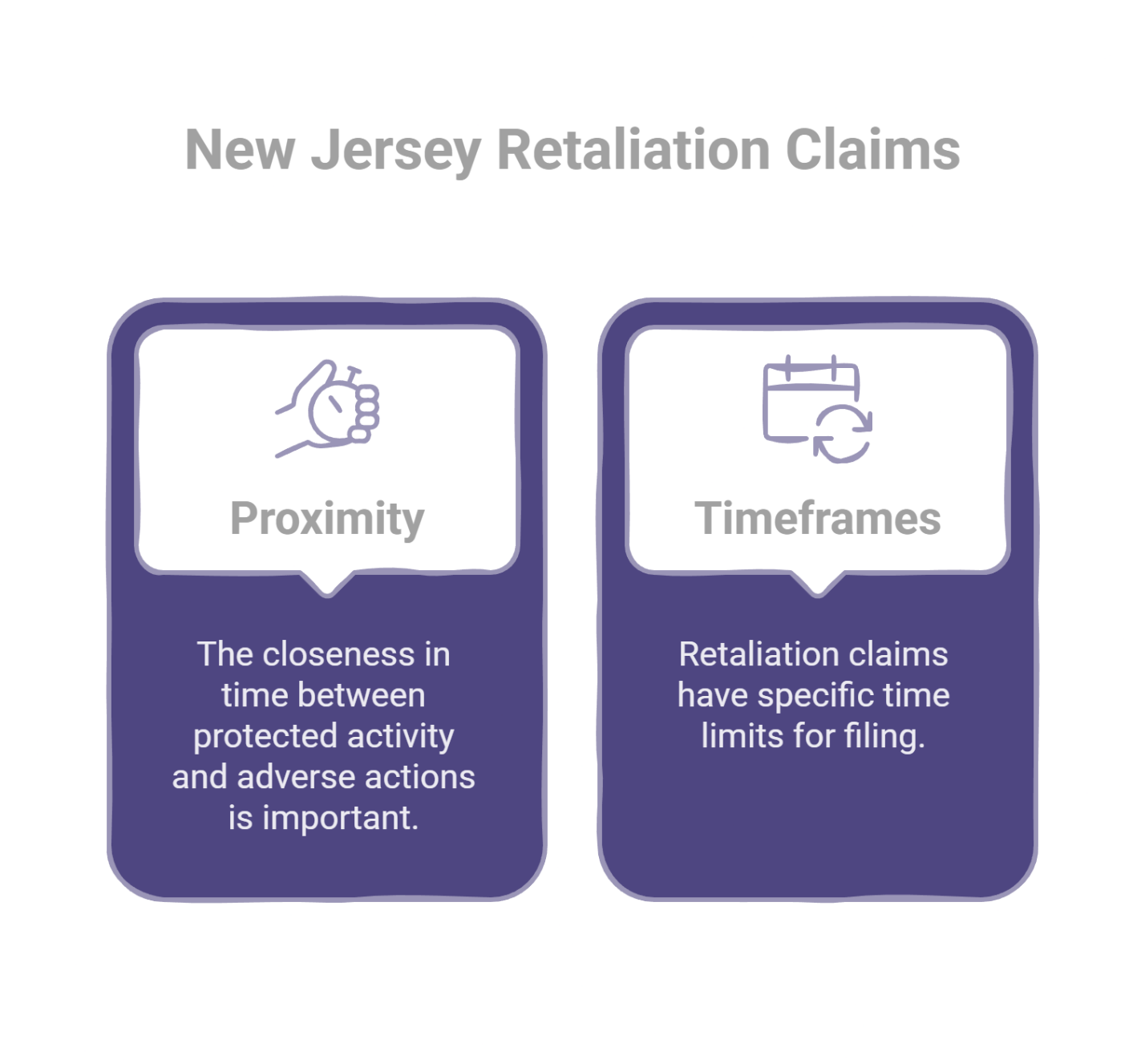
The New Jersey Law Against Discrimination includes protections against workplace retaliation. These protections generally apply when adverse employment actions follow protected activity—such as raising concerns about discriminatory treatment. The proximity between when someone engages in protected activity and when adverse changes occur can be legally significant when evaluating whether conduct might constitute retaliation.
Retaliation claims in New Jersey are subject to time-related requirements. Various types of workplace claims must be brought within certain timeframes, though these periods can vary based on the specific nature of the concern and the legal pathway involved. Some matters involve administrative filing periods, while others relate to statutory limitations. The specific timeframes depend on individual circumstances and the applicable legal framework.
Illustrative Example
[ILLUSTRATIVE EXAMPLE] In a hypothetical situation where an employee raises concerns about race-related treatment through internal channels and subsequently experiences changes in job responsibilities, the temporal relationship between these events might be evaluated under New Jersey’s anti-retaliation framework. The trier of fact could consider factors such as how soon the changes occurred after the protected activity and whether the pattern of changes aligns with typical business practices. [END EXAMPLE]
When workplace treatment changes shortly after someone raises concerns about race-related issues, the temporal proximity may be relevant to evaluating whether the situation reflects a retaliatory pattern. New Jersey law recognizes that timing can be one factor among many in assessing workplace conduct.
💡 Quick Takeaways
- Time-related requirements: New Jersey retaliation protections include various timeframes that can affect which legal options might be available later.
- Proximity matters: The closeness between protected activity and adverse employment changes can be relevant when evaluating potential retaliation concerns.
- Individual assessment: How timing considerations apply depends on specific facts and requires evaluation by a qualified attorney.
Evidence and Workplace Records as Time Passes
Performance reviews, email correspondence, and internal communications can evolve significantly as time passes. Contemporaneous documentation of events—including written performance feedback, shift assignments, project allocations, and communications with supervisors—may become more difficult to locate or reconstruct as weeks and months go by.
Memories of specific conversations, meeting details, and the precise timing of events can become less clear over time. The exact wording of verbal exchanges, the context in which certain statements were made, and the sequence of specific interactions may fade. When evaluating whether workplace conduct might constitute a retaliatory pattern, contemporaneous records—such as emails sent shortly after key events or performance reviews documented before and after protected activity—can be relevant to understanding the full context.
Workplace documentation itself can change. Performance improvement plans may be initiated, personnel files may be updated, and organizational records may be modified through normal business processes. The state of evidence at different points in time can vary, which is one reason why timing considerations arise in employment matters.
💡 Quick Takeaways
- Documentation availability: Workplace records including emails, performance reviews, and internal communications may become harder to locate as time passes.
- Contemporaneous evidence: Records created close in time to events can be relevant when assessing whether conduct reflects a potential retaliatory pattern.
Informational Overview of Prompt Consultation with New Jersey Retaliation Lawyers
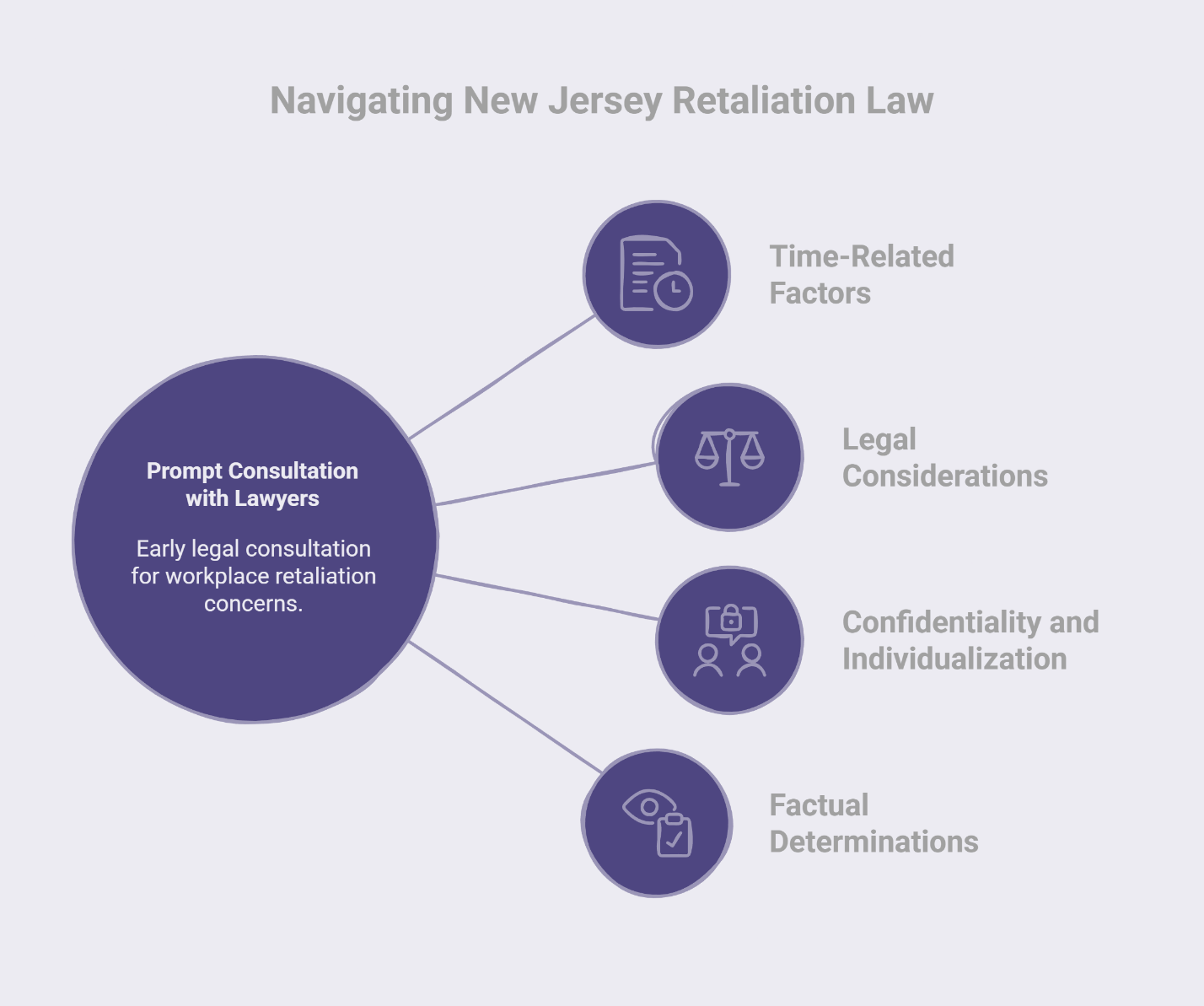
New Jersey retaliation lawyers typically consider various time-related factors when evaluating workplace concerns. These may include when the protected activity occurred, the proximity of any adverse employment actions to that activity, whether patterns developed over time, and how workplace documentation reflects the sequence of events. The evaluation process generally involves examining whether the timing and circumstances might fall within New Jersey’s anti-retaliation frameworks.
Early consultation with a qualified New Jersey employment attorney can help individuals understand whether their specific experiences might raise legal considerations. Legal advice depends on the particular facts and nuances of each situation—elements that can only be assessed through individualized evaluation. Many individuals choose to consult an attorney soon after concerns arise because time-related rules can be complex and applicable deadlines vary, and because the factual assessment requires professional legal judgment about how specific circumstances align with established legal standards.
Consultation with New Jersey employment attorneys is typically confidential and individualized. Attorneys evaluate the specific timeline of events, the nature of the protected activity, the types of adverse changes experienced, and how these elements relate to New Jersey law. Because legal protections depend on precise factual determinations and the application of legal standards to unique circumstances, only a qualified New Jersey attorney can assess how the law applies to a particular situation and provide advice tailored to individual facts.
💡 Quick Takeaways
- Timing factors: New Jersey retaliation lawyers evaluate when protected activity occurred, proximity of adverse actions, and patterns over time.
- Why consultation matters: Legal advice requires individualized assessment of specific facts, nuances, and how circumstances align with legal standards—determinations that require professional legal judgment.
Conclusion
Time sensitivity represents an important consideration in New Jersey workplace retaliation matters. The proximity between protected activity and adverse employment actions, the evolution of workplace records and evidence over time, and the various time-related requirements under New Jersey law all contribute to why many individuals consult with qualified employment attorneys promptly when concerned about potential retaliation.
This article provides general information only about timing considerations in New Jersey retaliation concerns. Only a qualified New Jersey employment attorney can evaluate how the law applies to a specific situation and provide legal advice.
Individuals experiencing significant emotional symptoms because of workplace issues may consider reaching out to licensed mental health professionals, general support hotlines, or trusted community organizations for appropriate support.
Frequently Asked Questions
Does timing really matter if I believe I am facing retaliation after raising race-related concerns at work in New Jersey?
Many retaliation protections under New Jersey law include time-related components. The proximity between when someone engages in protected activity—such as raising concerns about race-related treatment—and when adverse employment changes occur can be significant when evaluating potential retaliation. Various types of claims must be brought within certain timeframes, though these periods vary based on specific circumstances.
A qualified New Jersey employment attorney can evaluate how timing considerations apply to individual facts, as legal assessment requires understanding the specific details and nuances of each situation. This information is general only, not legal advice.
When should I consider speaking with a New Jersey retaliation lawyer about my situation?
Many individuals choose to consult a New Jersey employment attorney soon after retaliation concerns arise. Time-related rules can be complex and fact-specific, and applicable filing deadlines vary. Additionally, determining how legal protections apply to specific facts requires professional legal judgment about the relationship between individual circumstances and established legal standards.
Early consultation can help clarify whether specific circumstances might fall within New Jersey’s anti-retaliation protections. Only a qualified New Jersey attorney can provide advice based on individual facts. This information is for general educational purposes only.
Further Useful Questions
How might my social media activity relate to concerns about retaliation in New Jersey?
Social media posts may sometimes be reviewed in employment or legal contexts. Sharing workplace details publicly—including information about internal concerns, personnel matters, or ongoing workplace situations—can have implications that vary based on specific circumstances. What individuals post on social media platforms, even on personal accounts, may become relevant in various contexts.
A qualified New Jersey employment attorney can discuss specific considerations related to social media activity during workplace concerns. This is general information only, not legal advice.
Can waiting to learn more about my rights affect my long-term career options in retaliation situations?
Delays in addressing retaliation concerns may affect both the legal options that might be available and how workplace events are documented or perceived over time. As time passes, workplace records can change, memories can fade, and the evidentiary picture can evolve. The impact of waiting varies significantly based on individual circumstances, the specific timeline involved, and the nature of the workplace situation.
Every situation differs, and this provides general New Jersey information only, not legal advice. A qualified attorney can evaluate how timing considerations might apply to specific facts.
Disclaimer: This content is for informational purposes only. This content is not legal advice. No attorney-client relationship is formed through this content. Please consult a qualified attorney in your jurisdiction for legal advice specific to your situation.
Considering Your Options About Workplace Retaliation Timing?
If you’re unsure how timing, documentation, or changing workplace conditions might affect your rights, you don’t have to sort through everything on your own. Zatuchni & Associates is one of the leading employment law firms in New Jersey, focusing on employment matters such as race discrimination, sex and gender discrimination, retaliation, employment protections for military service, and wrongful termination. Contact us today if you’d like to discuss your situation confidentially with a New Jersey employment attorney and better understand how timing factors might relate to your options. You can reach out through our contact form or by calling our office—whatever feels most comfortable for you.
You must be logged in to post a comment.