
📌 Key Takeaways
Subtle duty shifts after protected activity may constitute retaliation under New Jersey law: Material changes in responsibilities that occur after a complaint or objection may be treated as retaliation under NJLAD and CEPA when they could affect the terms, conditions, or privileges of employment.
Illustrative indicators of subtle retaliation in corporate settings: Examples may include, including but not limited to, removal from high-visibility initiatives, reductions in budget/staff/decision authority, curtailed access to senior stakeholders, abrupt recalibration of performance metrics, and stalled promotion prospects.
Adverse employment action is evaluated contextually: New Jersey law may treat materially negative responsibility changes as adverse employment actions when they could deter a reasonable employee from engaging in protected activity; factors often discussed include temporal proximity and whether a causal connection may be inferred from surrounding circumstances.
Legitimate business realignments and cumulative impact can coexist: Not every reassignment signals retaliation; however, a series of reductions in visibility, authority, and access might produce a materially adverse impact even if each step appears minor in isolation.
Timing and legal complexity warrant caution: Certain New Jersey retaliation claims may be subject to a two-year statute of limitations, and other deadlines may apply; individualized circumstances and workplace context typically shape the analysis.
This summary is informational only and does not constitute legal advice. Because retaliation claims involve complex factual and legal analysis, consulting a qualified New Jersey employment attorney may be beneficial. Laws are subject to change.
In New Jersey, a material shift in responsibilities following protected activity may constitute retaliation under the New Jersey Law Against Discrimination (NJLAD) and the Conscientious Employee Protection Act (CEPA), depending on context, timing, and impact on the terms, conditions, or privileges of employment. This article is informational. Laws are subject to change; current statutory protections may differ in the future.
Subtle Retaliation in Corporate Settings
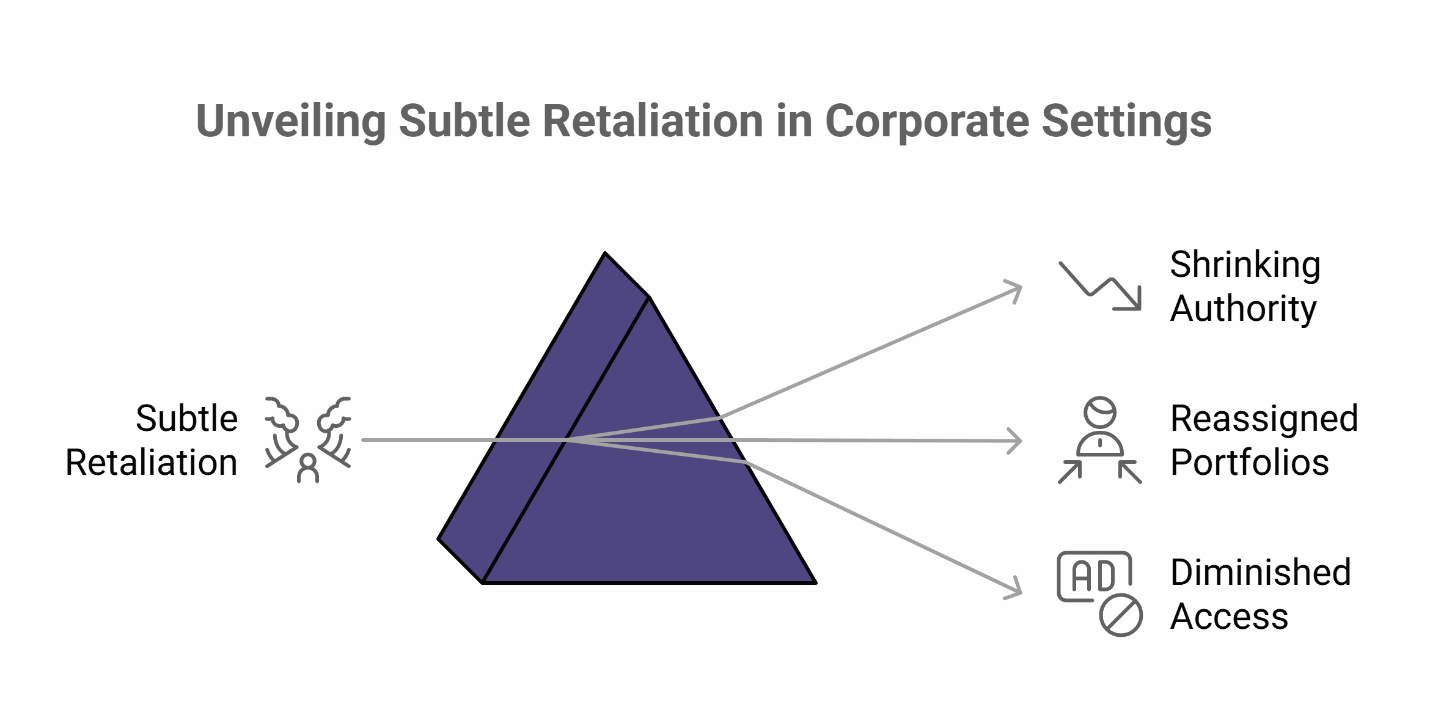
In corporate environments, retaliation may appear incremental rather than abrupt. After reporting discrimination under NJLAD (N.J.S.A. 10:5-1 et seq.) or objecting to practices covered by CEPA (N.J.S.A. 34:19-1 et seq.), a senior professional might observe shrinking authority, reassigned portfolios, or diminished access to key stakeholders. Under New Jersey law, such changes could matter if they materially affect professional standing or advancement opportunities. Temporal proximity may be relevant, but a trier of fact may consider the broader context, including whether a plausible causal connection to the protected activity exists. Individuals seeking current statutory language should consult the New Jersey Statutes Annotated, official resources such as the New Jersey Division on Civil Rights, or a qualified attorney.
This section provides general information only and does not constitute legal advice. Laws are subject to change.
Examples of Subtle Retaliation
Examples include, but are not limited to:
- Removal from a high-visibility initiative or reassignment of leadership to a peer.
- Reduction in budget, staffing, or decision authority without a clear business explanation.
- Curtailment of access to senior decision-makers or cancellation of standing meetings.
- Abrupt recalibration of performance metrics or documentation practices after protected activity.
- Stalled promotion prospects or withdrawal of stretch assignments without explanation.
Under New Jersey law, these changes may be treated as adverse employment actions when they plausibly affect status, trajectory, or compensation pathways and when they bear on the terms, conditions, or privileges of employment. The analysis remains fact-sensitive and circumstance-dependent.
General information only; not legal advice. Laws are subject to change; current statutory protections may differ in the future.
How New Jersey Law Treats “Adverse Employment Action”

NJLAD prohibits retaliation for opposing or reporting discrimination or harassment, and CEPA protects whistleblowing related to reasonably believed unlawful or improper practices. New Jersey law may treat materially negative changes in responsibilities as adverse employment actions when they could deter a reasonable employee from engaging in protected activity or when they affect the terms, conditions, or privileges of employment. Factors often discussed in retaliation contexts include temporal proximity and whether a causal connection can be inferred from the sequence of events and surrounding circumstances. This discussion remains conceptual and does not identify elements, burdens, or proofs.
Educational only; not legal advice. Laws are subject to change; current statutory protections may differ in the future.
Normal Business Change or Retaliation?
Not every reassignment reflects retaliatory motive. Organizations regularly realign work for legitimate reasons, and the inquiry may consider stated business justifications, timing, consistency with past practices, and the cumulative effect of multiple changes. A series of reductions in visibility, authority, and access could produce a materially adverse impact even when each step appears minor in isolation. Certain New Jersey retaliation claims may be subject to a two-year statute of limitations, and other deadlines may apply; timeliness is a legal consideration that can influence available options. For an individualized assessment or to obtain current statutory language, it is advisable to consult a qualified New Jersey employment attorney.
General information only; not legal advice. Laws are subject to change.
Conclusion
Subtle responsibility shifts may carry significant consequences in New Jersey’s corporate sector, and they may qualify as retaliation under NJLAD or CEPA when they materially affect professional standing or career trajectory. Recognition of these dynamics helps frame the issue for further consideration. Because retaliation claims involve complex factual and legal analysis, individuals should consult a qualified New Jersey employment attorney. For broader context, see the related hub article referenced in the content brief.
This article is informational only. Laws are subject to change.
Frequently Asked Questions
What actions may be considered retaliation under New Jersey law?
Adverse actions may include termination or demotion; however, New Jersey law also recognizes subtle measures that diminish responsibilities, decision authority, or advancement opportunities following protected activity. A trier of fact may consider whether the change could deter a reasonable employee from speaking up and whether a causal connection to the protected activity can be inferred from the timing and context of the events.
Disclaimer: General information only; not legal advice. Laws are subject to change.
Can changes to job duties after filing a complaint amount to retaliation?
Such changes might qualify as retaliation. For example, exclusion from key initiatives, loss of access to decision-makers, or stalled promotion prospects after engaging in protected activity may be viewed as materially adverse depending on the specific facts and circumstances. The analysis of each situation is fact-specific, so it is best to consult with a New Jersey employment attorney.
Disclaimer: Informational content only; not legal advice. Laws are subject to change; current statutory protections may differ in the future.
Follow-Up Questions
Are minor changes in my job duties enough to be considered retaliation?
While a single, minor adjustment may not be sufficient, a series of seemingly routine changes can, in combination, materially alter one’s professional standing and long-term trajectory. The practical impact of the changes is often more significant than their formal description. An attorney can help evaluate the cumulative effect of such changes.
Disclaimer: General information only; not legal advice. Laws are subject to change.
How important is timing in a retaliation claim?
Close timing between a protected activity and an adverse action may support an inference of a retaliatory motive. However, timing is just one factor a trier of fact may consider, along with other evidence related to the workplace context and the employer’s stated reasons for the action.
Disclaimer: Informational only; not legal advice. Laws are subject to change; current statutory protections may differ in the future.
Required Disclaimer: This article is for informational purposes only and does not constitute legal advice. Legal outcomes depend on specific circumstances. Laws are subject to change. For legal advice, consult a qualified attorney.
Protect Your Career with Experienced Guidance
At Zatuchni & Associates, we’ve built a strong reputation advocating for New Jersey employees facing workplace retaliation, discrimination, and wrongful treatment. If you’re concerned that subtle changes in your responsibilities may be a form of retaliation, you don’t have to navigate the situation alone.
Take the next step with confidence. Contact us today to discuss your situation with an experienced New Jersey retaliation lawyer.
Prefer to explore further first? Browse our website to learn more about our approach, client successes, and how we can stand with you in protecting your career.
You must be logged in to post a comment.