
📌 Key Takeaways
New Jersey’s Anti-Retaliation Framework Recognizes Post-Complaint Employment Changes: Under New Jersey law, generally, the NJLAD provides protections when materially adverse employment actions follow protected activity such as reporting race discrimination, though laws are subject to change and individual circumstances require professional legal evaluation.
Performance Improvement Plans May Merit Legal Attention When Timing Is Suspicious: Legal frameworks typically examine PIPs initiated shortly after discrimination complaints, particularly when employees previously showed no documented performance deficiencies, as these timing patterns often appear in retaliation discussions under established employment law principles.
Material Changes to Job Conditions Encompass Multiple Employment Actions: Common legal analysis includes examining performance rating drops, duty reductions, reassignments affecting advancement opportunities, and exclusions from professional responsibilities that substantively alter employment terms following protected activity.
Professional Legal Assessment Is Essential for Individual Situations: The complexity of employment retaliation law and fact-specific nature of these claims requires qualified New Jersey employment attorneys to evaluate whether workplace changes following discrimination complaints might be legally significant under current law.
Documentation and Timing Patterns Receive Legal Scrutiny: Legal principles suggest that sudden performance concerns appearing in formal documentation without prior informal discussions, coupled with proximity to discrimination complaints, frequently feature in materials addressing potential retaliation under New Jersey’s legal framework.
This overview provides foundational understanding of how post-complaint workplace changes are discussed within New Jersey’s legal framework, while comprehensive analysis of individual circumstances requires professional legal expertise to navigate the complex interplay of timing, materiality, and legal standards. This content is informational only and does not constitute legal advice; individuals experiencing workplace changes after filing complaints should consult with a qualified New Jersey employment attorney for guidance specific to their circumstances.
When mid-career professionals in New Jersey corporate environments raise concerns about race discrimination, workplace dynamics often shift in ways that merit understanding within the state’s legal framework. Performance improvement plans, altered ratings, and job reassignments frequently emerge as discussion points in materials addressing post-complaint workplace changes under New Jersey’s anti-discrimination laws.
Under New Jersey law, generally, the New Jersey Law Against Discrimination (NJLAD) (N.J.S.A. 10:5-1 et seq.) establishes the state’s framework for addressing discrimination and retaliation in employment contexts. Laws and agency guidance may change, and this general information can become outdated. This overview examines how certain workplace actions are commonly discussed in informational resources when they occur following protected activity, such as reporting race-based discrimination.
Given the complexity of employment law matters and the fact-specific nature of retaliation claims, individuals experiencing workplace changes after filing complaints should contact a qualified New Jersey employment attorney to understand how these legal principles apply to their specific circumstances. A qualified attorney can provide guidance based on the specific facts of a situation, which general information cannot cover.
+——————————————————————————————————-+
💡 Quick Takeaways
Protected Activity Recognition: New Jersey law recognizes opposing or reporting discrimination as protected workplace activity under NJLAD provisions.
Material Change Focus: Employment actions that materially alter job conditions after complaints often receive attention in retaliation discussions.
Professional Guidance Essential: These workplace changes require individual legal assessment by qualified attorneys familiar with New Jersey employment law.
+——————————————————————————————————-+
Understanding Protected Activity and Anti-Retaliation Concepts in New Jersey
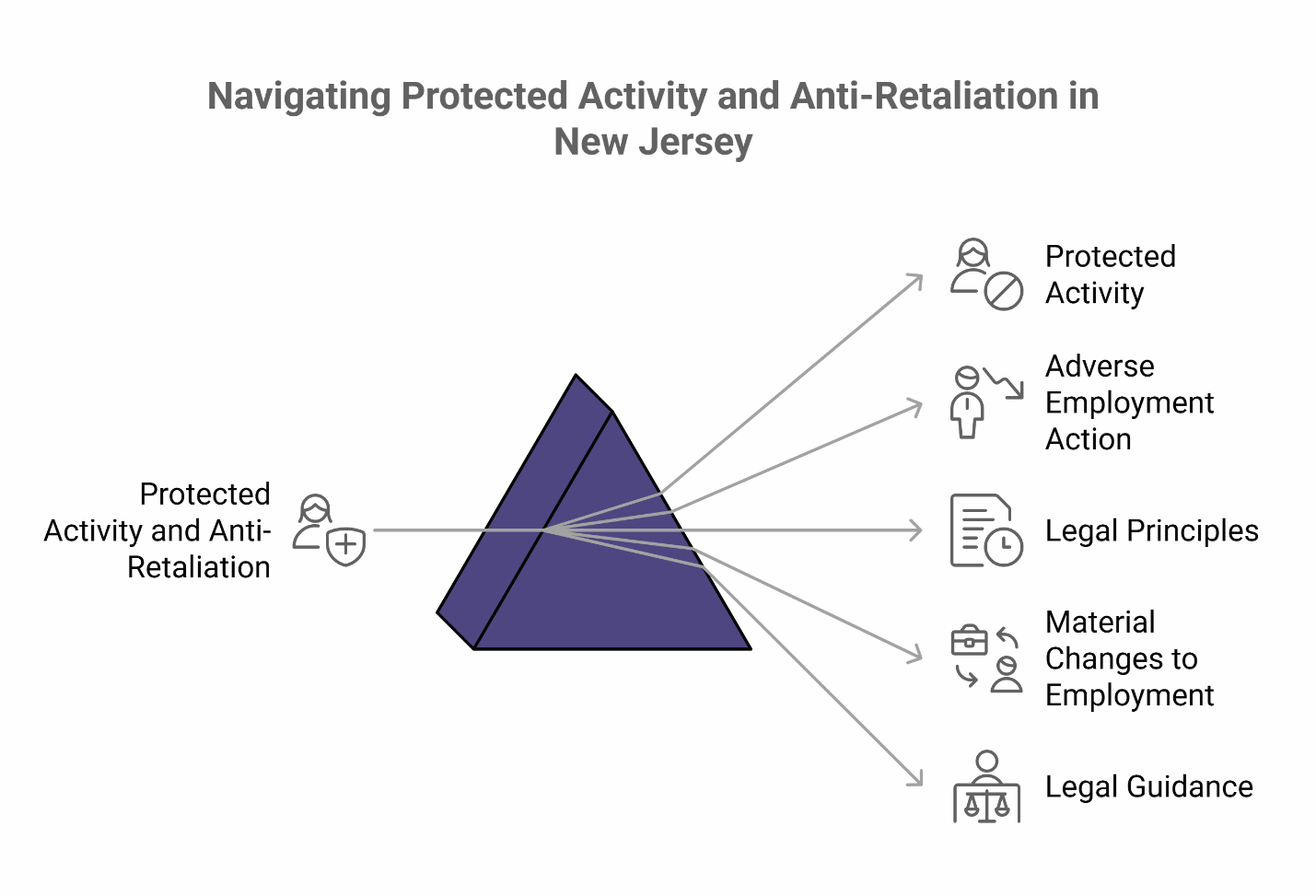
Under New Jersey law, generally, protected activity encompasses actions such as opposing discrimination, filing complaints with the New Jersey Division on Civil Rights (DCR), or participating in discrimination-related proceedings. Laws are subject to change, and current protections may differ from this general overview. The NJLAD’s anti-retaliation provision (N.J.S.A. 10:5-12(d)) addresses situations where individuals face adverse employment actions following such protected conduct.
Many jurisdictions define adverse employment action as materially significant changes to employment terms or conditions. Legal frameworks typically recognize that these changes affect compensation, responsibilities, working conditions, or career advancement opportunities in ways that would be meaningful to a reasonable employee in similar circumstances.
Common legal principles suggest that retaliation discussions in New Jersey contexts often focus on the timing and nature of employment actions following protected activity. Typical legal procedures include examining whether proximity in timing between a complaint and subsequent workplace changes may be relevant to establishing a potential connection between the two events.
Material changes to terms and conditions of employment represent a central legal concept in these discussions. Under employment law principles, generally, such changes encompass alterations that substantively affect an employee’s job situation, including modifications to duties, reporting relationships, work locations, or performance expectations that impact the fundamental nature of the employment arrangement.
The complexity of proving retaliation claims and the fact-specific nature of employment law requires professional legal guidance. Individuals experiencing workplace changes after filing discrimination complaints should contact a qualified New Jersey employment attorney who can evaluate the specific facts and legal nuances involved in their situation.
+——————————————————————————————————-+
💡 Quick Takeaways
Legal Framework: NJLAD provides New Jersey’s primary anti-retaliation protections, though laws are subject to change and professional guidance is essential.
Material Standards: Employment changes must materially affect job conditions, but individual circumstances require professional legal evaluation.
+——————————————————————————————————-+
How Performance Improvement Plans Are Discussed After a Complaint (Informational Context)
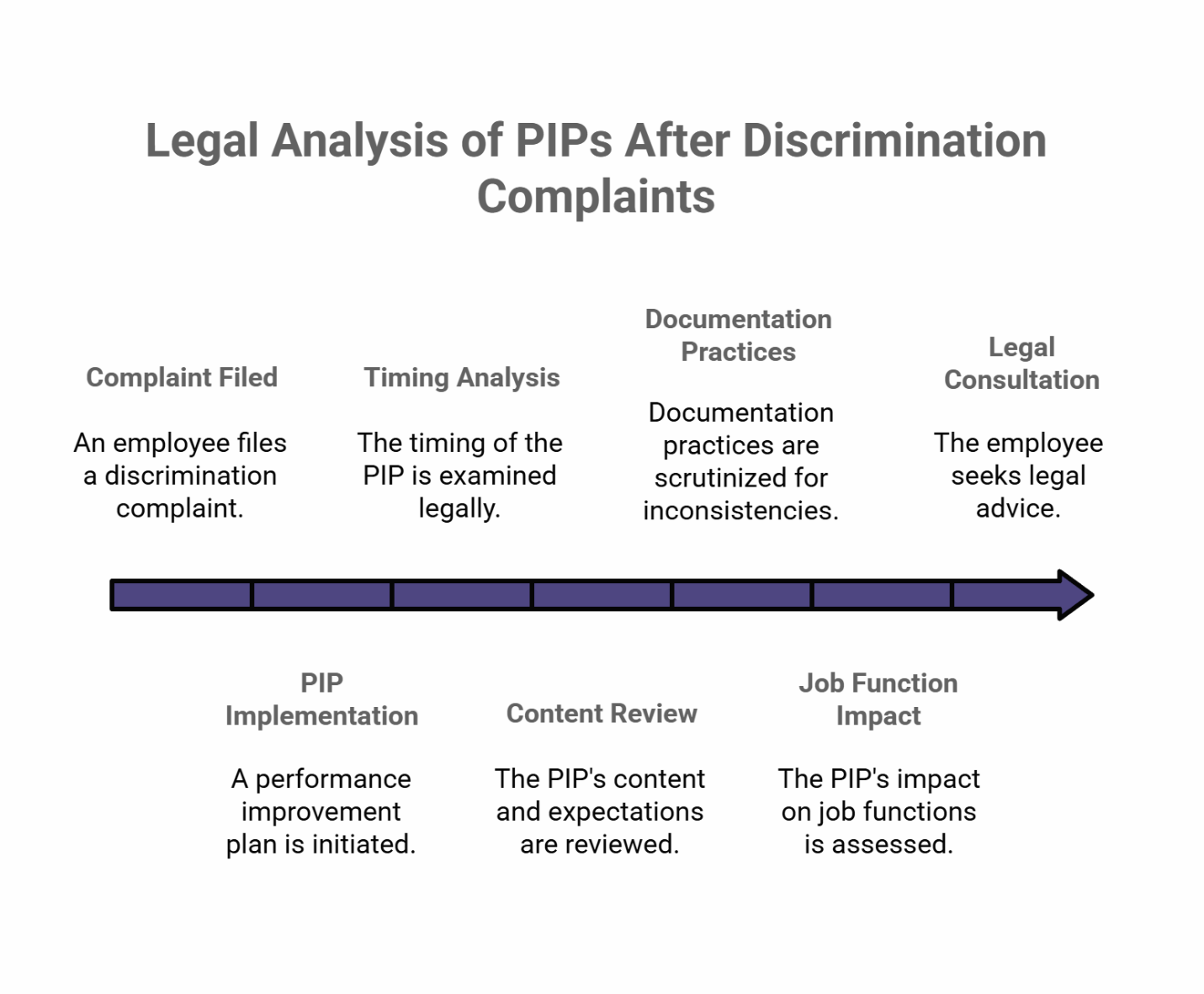
Legal frameworks typically recognize performance improvement plans as formal workplace tools designed to address perceived performance deficiencies through structured expectations and timelines. Under employment law principles, generally, PIPs initiated shortly after discrimination complaints often receive attention in informational materials addressing post-complaint workplace dynamics.
Common legal analysis includes examining the timing of PIP implementation following protected activity. Many jurisdictions consider situations where employees receive their first formal performance improvement plan within weeks or months of raising discrimination concerns, particularly when prior performance evaluations showed no documented deficiencies.
Typical legal procedures examine the content and expectations within PIPs in post-complaint contexts. Legal principles suggest that plans establishing significantly different performance standards, unrealistic timelines, or requirements substantially diverging from previous job expectations may be relevant to discussions about materially adverse employment actions under New Jersey law. Laws are subject to change regarding these standards.
Employment law frameworks generally recognize that documentation practices surrounding PIP implementation merit consideration. Under legal principles, typically, situations where performance concerns appear suddenly in formal documentation following a complaint, without corresponding informal discussions or progressive discipline, frequently appear in materials addressing retaliation concerns.
Legal analysis often includes examining the relationship between PIP requirements and an employee’s ability to perform essential job functions. Common legal principles suggest that plans fundamentally altering job responsibilities or imposing conditions that effectively prevent successful completion may be viewed as materially affecting employment terms within established legal frameworks.
Performance improvement plan situations following discrimination complaints involve complex legal considerations that require professional analysis. Individuals facing PIPs after filing complaints should contact a qualified New Jersey employment attorney to understand how timing, content, and implementation factors might be legally significant in their specific circumstances.
Performance Ratings After a Complaint: General Discussion Points
Under employment law principles, generally, performance evaluation changes following discrimination complaints represent a frequently discussed topic in legal materials. Legal frameworks typically examine sudden declines in performance ratings, particularly when occurring after previously satisfactory or exemplary evaluations, in post-complaint workplace dynamics analysis.
Common legal analysis includes examining the magnitude of rating changes in these contexts. Many jurisdictions consider situations involving substantial drops in numerical scores or categorical ratings (such as moving from “exceeds expectations” to “needs improvement”) within evaluation periods following protected activity as potentially relevant to retaliation discussions. Laws and evaluation standards may change over time.
Legal principles suggest that consistency with historical performance patterns represents another element often examined in these contexts. Under typical legal analysis, ratings that diverge significantly from established performance trends, particularly when accompanied by newly documented concerns not previously raised through informal feedback or coaching, may be viewed as material changes to employment conditions.
Employment law frameworks generally recognize that comparative treatment within performance evaluation systems merits consideration. Common legal procedures examine situations where employees receive markedly different treatment in evaluation processes compared to similarly situated colleagues, particularly following discrimination complaints, in materials addressing potential retaliation concerns under state law.
Legal analysis often includes examining the connection between performance ratings and tangible employment consequences. Under employment law principles, typically, ratings that directly impact promotion eligibility, merit increases, or job security may be viewed as materially affecting terms and conditions of employment within established legal frameworks. Current legal standards are subject to change.
Performance rating changes after discrimination complaints involve complex timing and comparative analysis that requires professional legal evaluation. Individuals experiencing sudden rating changes following protected activity should contact a qualified New Jersey employment attorney to assess whether these changes might be legally significant under current law.
+——————————————————————————————————-+
💡 Quick Takeaways
Timing Considerations: Performance changes occurring shortly after protected activity often receive legal attention, but professional analysis is required.
Material Impact: Rating alterations affecting career advancement require individual legal assessment by qualified employment attorneys.
+——————————————————————————————————-+
Reassignments and Duty Changes Following a Complaint
Legal frameworks typically recognize job reassignments and duty modifications as significant categories of employment actions in post-complaint legal analysis. Under employment law principles, generally, these changes may involve transfers to different departments, shifts in reporting relationships, or alterations to fundamental job responsibilities that affect an employee’s professional standing.
Common legal analysis includes examining the reduction of responsibilities following discrimination complaints. Many jurisdictions consider situations where employees lose supervisory duties, client relationships, or high-visibility projects following discrimination complaints in materials addressing retaliation concerns within corporate environments. Laws governing these workplace changes are subject to change.
Legal principles suggest that geographic or departmental transfers merit consideration in these contexts, particularly when such moves result in reduced advancement opportunities, isolation from professional networks, or assignment to less desirable work locations. Under typical legal analysis, these changes might affect career trajectory and professional development in ways that could be legally significant.
Employment law frameworks generally examine changes to reporting relationships as potentially relevant elements in post-complaint workplace dynamics. Common legal procedures consider reassignments that place employees under new supervisors, particularly where such a change could be perceived as creating a more challenging or isolated work environment, in discussions about potential retaliation under established legal frameworks.
Legal analysis often includes examining exclusion from meetings, committees, or decision-making processes that previously formed part of an employee’s regular duties. Under employment law principles, typically, such exclusions may be viewed as material changes to job conditions, particularly when they affect an employee’s ability to perform essential functions or maintain professional relationships critical to career advancement. Current legal interpretations of these changes are subject to evolution.
Job reassignments and duty changes after discrimination complaints require careful legal analysis of timing, scope, and impact. Individuals experiencing significant workplace changes following protected activity should contact a qualified New Jersey employment attorney to evaluate whether these changes might constitute legally actionable retaliation under current law.
New Jersey Framework at a Glance
Under New Jersey law, generally, the New Jersey Law Against Discrimination serves as the state’s primary framework for addressing employment discrimination and retaliation. Laws are subject to change, and current NJLAD provisions may differ from this general overview. NJLAD establishes protections for employees who engage in protected activity, including opposing discrimination or participating in complaint processes through the Division on Civil Rights.
Legal frameworks typically recognize that federal law, including Title VII of the Civil Rights Act of 1964, provides additional context for understanding discrimination and retaliation protections. Under employment law principles, generally, New Jersey law often offers broader protections and different procedural requirements than federal frameworks. Both state and federal laws are subject to change, affecting the scope and application of legal protections.
Common legal principles suggest that the Division on Civil Rights functions as New Jersey’s primary state agency for investigating discrimination complaints and publishing informational materials about employee rights and employer obligations under NJLAD. Legal procedures typically involve DCR resources providing guidance on the state’s approach to discrimination and retaliation issues in employment contexts. Agency guidance and procedures may change over time.
The interplay between state and federal frameworks involves complex jurisdictional and procedural considerations that require professional legal analysis. Laws and agency guidance may change, affecting procedural requirements and available protections. Individuals with questions about their rights under New Jersey or federal law should contact a qualified New Jersey employment attorney for guidance specific to their circumstances and current legal requirements.
Short, Neutral FAQs (Informational Only)
What constitutes protected activity under New Jersey law?
Under New Jersey law, generally, protected activity includes opposing discrimination, filing complaints with appropriate agencies, or participating in discrimination-related proceedings. Laws are subject to change, and the NJLAD recognizes these actions as legally protected conduct in employment contexts. Given the complexity of determining what constitutes protected activity in specific situations, individuals should contact a qualified New Jersey employment attorney for guidance on their particular circumstances.
Are performance improvement plans automatically considered retaliation?
Legal principles suggest that PIPs represent legitimate management tools when used appropriately. Under employment law frameworks, typically, context, timing, and the relationship to protected activity determine whether such actions might be viewed as materially adverse within retaliation analysis. Laws governing these determinations are subject to change. Professional legal evaluation is essential, as individuals experiencing PIPs after complaints should contact a qualified employment attorney to assess their specific situation.
How are material changes to employment conditions typically understood?
Under employment law principles, generally, material changes involve alterations that substantively affect job responsibilities, compensation, working conditions, or advancement opportunities in ways that would be significant to reasonable employees in similar positions. Legal frameworks are subject to change, and individual circumstances require professional analysis. Complex legal determinations about materiality require attorney consultation.
What role does timing play in retaliation discussions?
Common legal analysis includes examining timing between protected activity and subsequent employment actions as potentially relevant in workplace dynamics discussions. Legal principles suggest that proximity alone does not determine legal outcomes, and comprehensive fact-specific analysis is required. Laws and legal interpretations regarding timing are subject to change. Professional legal guidance is essential for understanding how timing factors might be legally significant in individual situations.
This article provides general information about New Jersey workplace concepts and is not legal advice. Reading this content does not create an attorney-client relationship. Because laws can change and legal analysis depends on the specific facts of a situation, individuals should contact a qualified New Jersey employment attorney for guidance on their particular circumstances.
Facing Workplace Changes After Reporting Discrimination?
At Zatuchni & Associates, we’ve spent years helping New Jersey professionals navigate the complex aftermath of race discrimination complaints. If you’re seeing sudden changes like a PIP, lowered evaluations, or job reassignments, it may be more than coincidence. Contact us today to speak with an experienced race discrimination attorney.
Want to learn more first? Browse our employment law services to see how we support professionals like you.
You must be logged in to post a comment.