
📌 Key Takeaways
Race as a Protected Characteristic in Advancement Decisions: Under New Jersey law, NJLAD generally prohibits race from serving as a motivating factor in promotions, compensation determinations, and allocation of career-critical assignments—decisions that may constitute adverse employment actions when they materially affect employment terms.
Two Frameworks for Assessment: New Jersey protections typically assess race-related disparities through disparate treatment (comparing outcomes between similarly situated employees of different races) or disparate impact (neutral practices with disproportionate racial effects), though each requires careful, fact-specific analysis that considers qualifications, performance records, and circumstances.
Subjective Criteria and Pattern Analysis: Heavy reliance on undefined standards like “cultural fit” or “leadership potential” may raise questions about consistent application when combined with disparate outcomes, and patterns over time involving similarly situated employees might inform broader assessments—though employers often apply such criteria for legitimate business reasons.
Time Sensitivity and Professional Representation: Time constraints may affect options for addressing potential NJLAD violations, with specific periods varying by claim type and ranging from months to years, while the procedural complexities, timing requirements, and fact-specific analysis needs typically make professional legal representation necessary rather than merely advisable.
Retaliation as Distinct Protection: Retaliation may constitute a separate legal concern when individuals raise discrimination concerns or participate in protected activities, with this protection typically existing independently of whether underlying discrimination occurred—though determining connections requires careful legal analysis of timing, causation, and other factors.
The full content provides detailed context about evidence concepts, comparator analysis, and the distinction between subjective decision-making for legitimate business purposes versus decisions improperly influenced by race—critical nuances for understanding how New Jersey law generally assesses these complex employment matters. This content is for informational purposes only and does not constitute legal advice. Laws are subject to change. For guidance on specific situations, contact a qualified New Jersey employment law attorney.
Workplace advancement decisions—promotions, compensation adjustments, and assignments to high-visibility projects—shape professional trajectories. When these decisions appear to diverge along racial lines, questions arise about whether legal protections under New Jersey law might apply. The New Jersey Law Against Discrimination (NJLAD), N.J.S.A. 10:5-1 et seq., generally establishes race as a protected characteristic in employment contexts. This overview examines how disparities in advancement-related decisions may be assessed under New Jersey employment protections, focusing on foundational legal concepts rather than procedural steps.
Given the complexity of employment discrimination matters and the fact-specific nature of legal analysis, consulting a qualified New Jersey employment law attorney can provide guidance tailored to individual circumstances. Legal advice depends on specific facts, nuances, and current legal standards that general information cannot address.
Disclaimer: This content is for informational purposes only and does not constitute legal advice. New Jersey law governs the matters discussed here; other jurisdictions may apply different standards. Laws are subject to change, and readers should verify current legal requirements with official sources or qualified legal counsel. No attorney-client relationship is formed through this content. For situation-specific questions, contact a qualified attorney licensed in New Jersey.
Understanding Advancement-Related Disparities Under New Jersey Law
Under New Jersey law, NJLAD generally prohibits discrimination based on race in various employment contexts. Advancement-related decisions—including promotions, compensation determinations, and allocation of career-critical assignments—may constitute adverse employment actions when they materially affect the terms and conditions of employment. Under typical NJLAD frameworks, race generally may not serve as a motivating factor in such decisions.
Employers typically make advancement decisions based on various business considerations, including performance evaluations, organizational needs, budget constraints, and strategic planning. Many of these decisions reflect legitimate, non-discriminatory factors. Legal assessments examine whether race improperly influenced outcomes despite such legitimate considerations.
Adverse Employment Action in Promotions, Pay, and Assignments
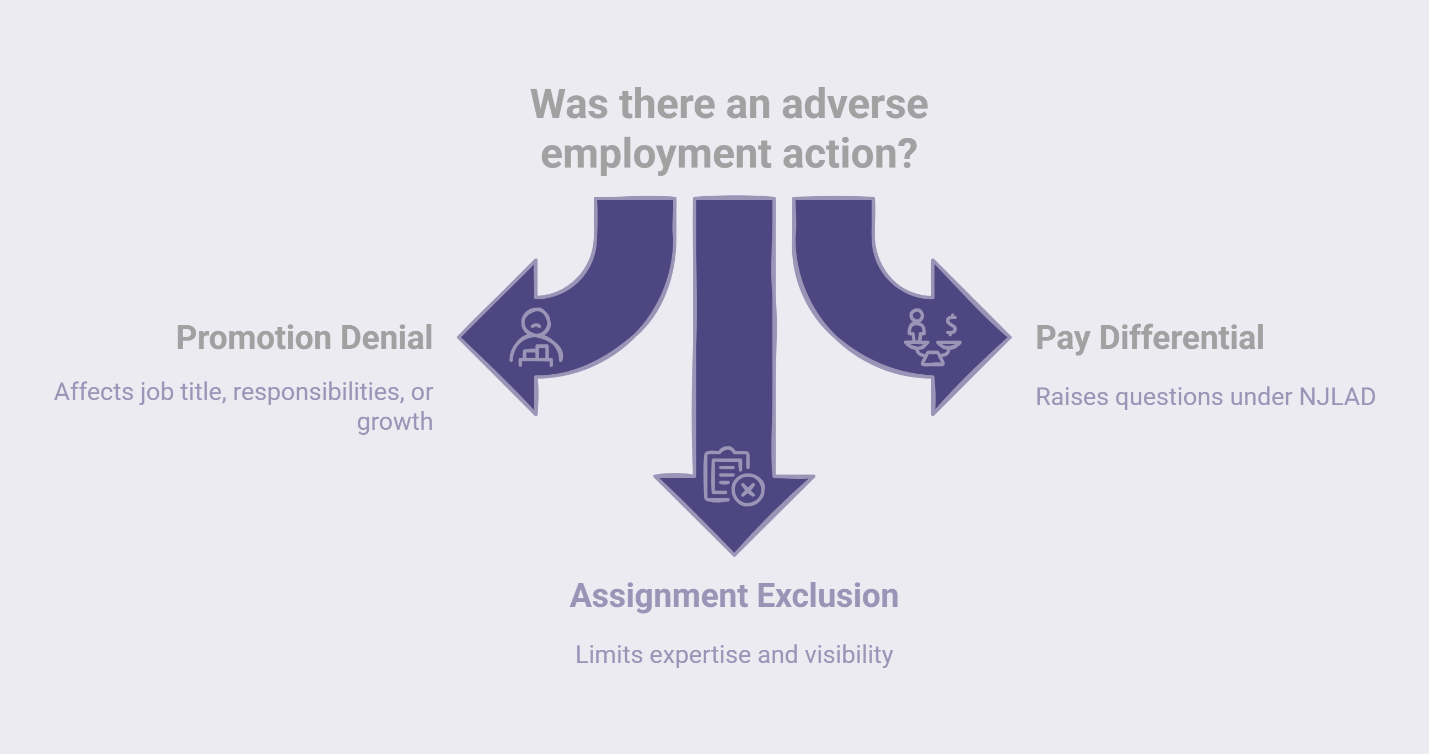
Adverse employment actions generally encompass decisions that meaningfully alter an individual’s employment circumstances. In the promotion context, this might include denial of advancement opportunities that affect job title, responsibilities, or professional growth. Compensation decisions involving pay differentials between similarly situated employees may raise questions under NJLAD principles. Assignment allocation—particularly exclusion from projects that build expertise, visibility, or advancement potential—might also be assessed as adverse employment actions in certain circumstances.
The legal framework typically distinguishes between subjective and objective decision-making criteria. Job-related, consistently applied standards often form the foundation of defensible employment decisions. When advancement decisions appear to depart from established, neutral criteria, questions may arise about the role race played in the outcome.
Important Note: The complexity of determining what constitutes an adverse employment action in specific circumstances makes professional legal consultation particularly valuable. Each situation’s unique facts inform this assessment.
Disparate Treatment vs. Disparate Impact (Overview)
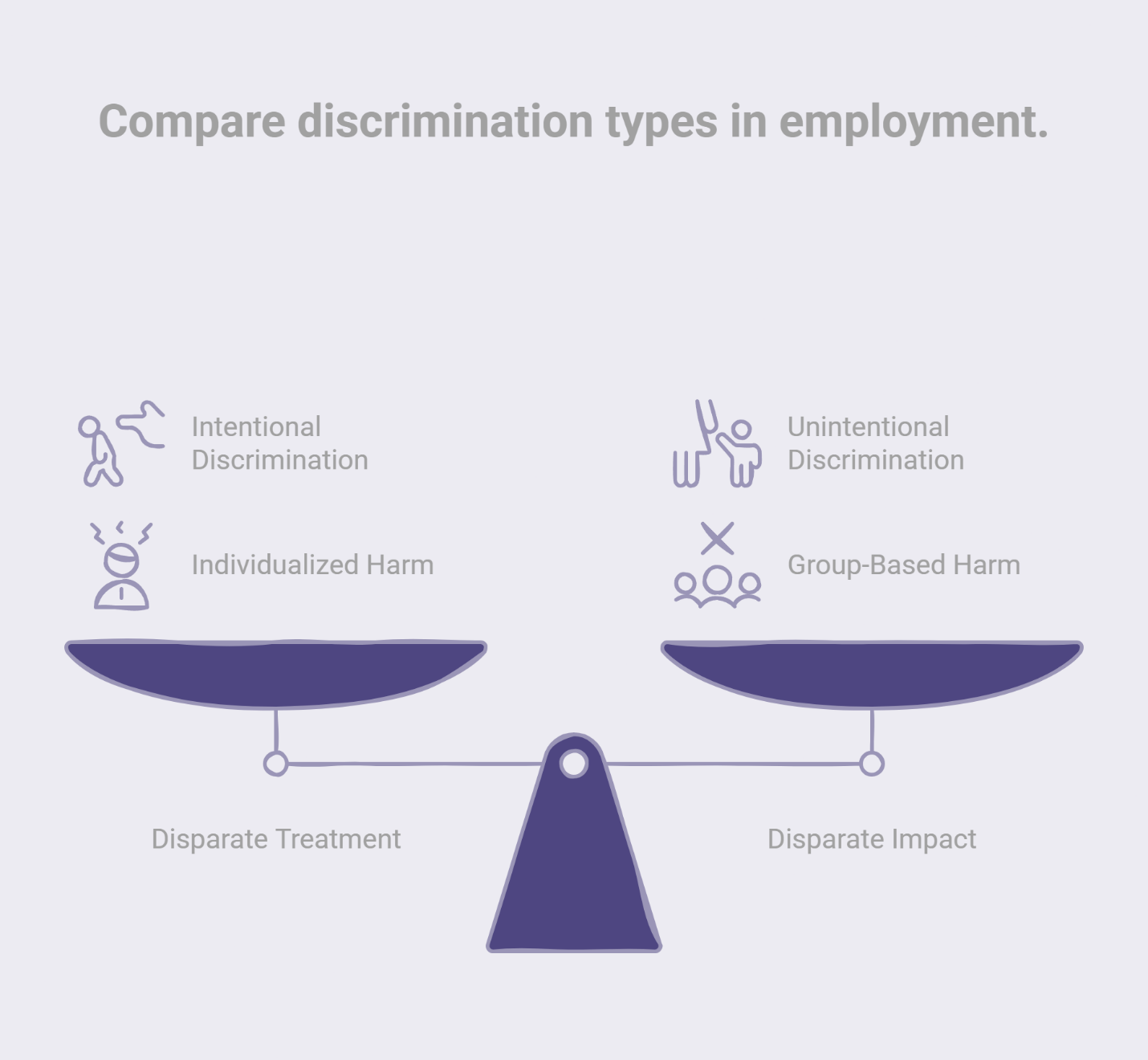
New Jersey employment protections typically recognize two conceptual approaches to assessing discrimination. Disparate treatment generally addresses situations where an individual receives different treatment based on a protected characteristic. In promotion contexts, this might involve comparing outcomes between similarly situated employees of different races under comparable circumstances.
Disparate impact concerns employment practices that appear neutral but may disproportionately affect individuals of a particular race. Even absent discriminatory intent, practices that create disparate outcomes based on race may raise legal questions under certain frameworks. Both concepts require careful, fact-specific analysis that depends on the particular circumstances involved.
Disclaimer: These are general legal concepts. Laws are subject to change, and their application varies based on specific facts. For current information about how these principles might apply to particular situations, consult official New Jersey legal resources or contact a qualified employment law attorney licensed in New Jersey.
+——————————————————————————————————-+
💡 Quick Takeaways
- Protected Status: Under New Jersey law, race is generally a protected characteristic under NJLAD, and advancement decisions—including promotions, pay, and key assignments—may constitute adverse employment actions when they materially affect employment terms.
- Two Assessment Approaches: New Jersey protections typically assess race-related disparities through disparate treatment (different treatment based on race) or disparate impact (neutral practices with disproportionate racial effects), though each requires fact-specific analysis.
+——————————————————————————————————-+
Evidence Concepts in Context
Similarly Situated Comparators
Legal assessments of advancement disparities often consider whether individuals were similarly situated—meaning they shared comparable qualifications, experience, performance records, and circumstances. Comparator analysis typically examines whether employees of different races received different outcomes under similar conditions. The specifics of each situation—including, but not limited to, job function, seniority level, performance evaluations, and relevant qualifications—inform this assessment.
Patterns over time may provide context for evaluating whether advancement decisions reflect consistently applied, job-related criteria. While individual decisions exist within specific factual contexts, repeated patterns involving similarly situated employees might inform broader assessments of workplace practices. However, pattern analysis requires careful evaluation of numerous variables and context-specific factors.
Pretext and Subjective Criteria
The legal concept of pretext generally addresses situations where stated reasons for employment decisions may not reflect actual motivations. When advancement decisions rely heavily on subjective criteria—such as “cultural fit,” “leadership potential,” or undefined “soft skills”—questions may arise about how these standards are applied across different groups.
Performance evaluation language, feedback patterns, and documented justifications for advancement decisions may all inform assessments of whether race played a role in outcomes. Subjective decision-making frameworks, while not inherently problematic, may warrant scrutiny regarding their consistent application. Statistical indications showing disparities in advancement outcomes among racial groups might raise questions, though such patterns alone typically do not establish legal violations. The specific circumstances, decision-making processes, and available evidence in each situation inform how these matters are assessed.
Important Consideration: Employers often apply subjective criteria for legitimate business reasons, and many such decisions reflect appropriate professional judgment. The legal question centers on whether race improperly influenced the application of these criteria—a determination that requires detailed, fact-specific analysis best evaluated by qualified legal counsel.
Disclaimer: This overview presents general legal concepts only. Laws are subject to change, and their application depends on specific facts and circumstances. Materials provided here do not constitute legal advice. For guidance on particular situations, contact a qualified New Jersey employment law attorney.
+——————————————————————————————————-+
💡 Quick Takeaways
- Comparator Analysis: Legal assessments often examine whether similarly situated employees—those with comparable qualifications, experience, and performance—received different advancement outcomes, though this analysis requires careful consideration of numerous context-specific factors.
- Subjective Criteria Considerations: Heavy reliance on undefined standards may raise questions about consistent application when combined with disparate outcomes, though many subjective decisions reflect legitimate business judgment requiring fact-specific legal evaluation.
+——————————————————————————————————-+
Time Sensitivity, Retaliation Considerations, and Professional Consultation
Time constraints may affect the ability to address potential NJLAD violations. While specific periods vary based on claim type and circumstances—and may range from months to years depending on the nature of the claim—awareness that timeframes exist is important. The consequences of missing applicable deadlines can be significant, making early consultation with qualified legal counsel potentially beneficial.
Retaliation as a Distinct Concept
Retaliation may constitute a separate legal concern under New Jersey protections. When individuals raise concerns about discrimination or participate in protected activities, subsequent adverse employment actions might raise retaliation questions. This protection typically exists independently of whether underlying discrimination occurred. The connection between protected activity and subsequent employment decisions forms part of the assessment framework, though determining such connections requires careful legal analysis of timing, causation, and other factors.
Employers often make multiple employment decisions over time for various legitimate business reasons. Distinguishing between decisions influenced by legitimate considerations and those potentially motivated by retaliation requires fact-specific evaluation that professional legal counsel can provide.
Procedural Considerations and Consultation
NJLAD-related matters may involve administrative enforcement through the New Jersey Division on Civil Rights, civil litigation, or both. These processes operate under specific frameworks with distinct characteristics. The procedural complexities, combined with strict timing requirements and technical filing standards, typically make these matters unsuitable for self-navigation without professional legal representation.
Professional legal consultation is often sought when advancement disparities appear systematic, involve significant career impact, or raise substantial questions about the role race played in decision-making. Attorneys licensed in New Jersey can evaluate specific circumstances, assess available options, and provide guidance tailored to individual situations. The complexity of employment discrimination matters—including fact-specific analysis, applicable legal standards, and procedural requirements—typically makes professional legal evaluation necessary rather than optional.
Contact a qualified New Jersey employment law attorney to discuss specific situations and obtain advice based on current laws and individual circumstances. Legal representation becomes particularly important given the complexity of evidence evaluation, legal procedure navigation, and protection of individual rights throughout these processes.
Disclaimer: This content provides general information only and does not constitute legal advice. Laws are subject to change. Readers should verify current legal requirements with official New Jersey legal resources or qualified legal counsel. No attorney-client relationship is formed through this content.
+——————————————————————————————————-+
💡 Quick Takeaways
- Time Awareness: Time limitations may affect options for addressing potential NJLAD violations, with specific periods varying by claim type—making early legal consultation potentially important for preserving available options.
- Professional Representation Value: The complexity of employment discrimination matters, combined with procedural requirements and fact-specific analysis needs, typically makes professional legal representation necessary rather than merely advisable.
+——————————————————————————————————-+
Conclusion
New Jersey employment protections generally establish race as a protected characteristic in advancement-related decisions. NJLAD typically provides a framework for assessing whether promotions, compensation, and assignment allocation reflect job-related, consistently applied criteria or whether race improperly influenced outcomes. Legal concepts including adverse employment action, similarly situated comparators, disparate treatment, disparate impact, and pretext inform these assessments, though each situation requires careful fact-specific analysis.
Employers often make advancement decisions based on numerous legitimate business considerations, including performance, organizational needs, and strategic planning. Legal assessments examine whether race improperly influenced these decisions despite such legitimate factors—a determination requiring detailed evaluation of specific circumstances, evidence, and applicable legal standards.
These foundational concepts provide context for understanding how New Jersey law may assess advancement disparities while recognizing that legal evaluations depend on particular circumstances. The fact-specific nature of discrimination analysis, combined with procedural complexities and timing requirements, makes professional consultation with qualified New Jersey employment law attorneys important for situation-specific evaluation and guidance.
Given the complexity of employment discrimination law and the serious consequences of these matters, contact a qualified New Jersey employment law attorney for advice tailored to specific circumstances and based on current legal standards.
This overview focuses on New Jersey law; other jurisdictions apply different legal standards. Laws are subject to change, and readers should verify current requirements with official sources or legal counsel.
Frequently Asked Questions
What does “adverse employment action” generally mean in promotion and pay contexts?
Under typical New Jersey legal frameworks, adverse employment action generally encompasses employment decisions that meaningfully alter the terms and conditions of employment. In advancement contexts, this might include denial of promotions affecting job title or responsibilities, compensation decisions creating pay differentials between similarly situated employees, or exclusion from assignments that build career-critical expertise. Not every workplace disappointment constitutes an adverse action—the decision must materially affect employment circumstances in ways that go beyond minor inconveniences or preferences.
However, employers make numerous employment decisions for various legitimate business reasons, including performance considerations, budget constraints, and organizational needs. Whether a particular decision constitutes an adverse employment action requires fact-specific analysis. Each situation’s unique facts inform whether a decision rises to this threshold under applicable legal standards. New Jersey law establishes these general principles, though other jurisdictions may apply different standards, and laws are subject to change.
For situation-specific questions about whether particular circumstances might constitute adverse employment actions, contact a qualified attorney licensed in New Jersey who can evaluate individual facts and provide guidance based on current legal standards.
When might professional legal consultation be particularly important regarding advancement disparities?
Professional legal consultation is often sought when advancement disparities appear systematic rather than isolated, involve significant career or financial impact, or raise substantial questions about whether race influenced decision-making. Situations involving documented performance that contrasts sharply with advancement outcomes, patterns affecting multiple individuals, or decisions relying heavily on subjective or undefined criteria might warrant legal evaluation.
The complexity of employment discrimination law—including evidence evaluation requirements, procedural technicalities, and strict timing constraints—typically makes professional legal representation important for protecting individual rights and navigating available options. Attorneys can assess specific circumstances, evaluate available evidence, and provide guidance tailored to individual situations based on current legal standards.
Time constraints may affect available options, making earlier consultation potentially beneficial for preserving legal rights. Qualified New Jersey employment law attorneys can address jurisdiction-specific questions, evaluate whether particular circumstances might warrant legal action, and provide situation-specific analysis that general information cannot provide.
Contact a qualified New Jersey employment law attorney to discuss specific situations and obtain professional legal advice based on individual circumstances and current law.
Disclaimer: These answers provide general information only and do not constitute legal advice. Laws are subject to change. No attorney-client relationship is formed through this content.
Less-Common Questions
Could performance-review language affect how advancement disparities are viewed?
Under general legal principles, performance evaluation language might inform assessments of whether advancement decisions reflect consistent, job-related criteria. Documentation patterns, feedback consistency, and the relationship between stated performance concerns and actual advancement outcomes may all factor into legal evaluations of whether race improperly influenced decisions.
[ILLUSTRATIVE EXAMPLE] In hypothetical situations where performance reviews use different descriptive language for employees of different races performing similar work—such as describing certain employees as “aggressive” while using “assertive” for others in comparable situations—questions might arise about whether subjective bias influenced evaluations and subsequent advancement decisions. [END EXAMPLE]
However, performance reviews exist within broader factual contexts that include numerous legitimate business considerations. Employers typically evaluate performance based on various objective and subjective criteria for legitimate business purposes. Their significance in legal assessments depends on the specific circumstances involved, the overall pattern of documentation, and numerous other factors requiring detailed evaluation.
Illustrative only; outcomes vary significantly based on individual situations and specific facts. This represents general information about factors that might be considered in legal assessments, not predictions about specific cases or guidance for particular situations. Laws are subject to change.
For questions about how performance review language in specific situations might relate to discrimination concerns, contact a qualified attorney licensed in New Jersey who can evaluate individual circumstances and provide professional legal advice.
How might social media activity be interpreted in workplace discrimination matters?
Social media activity may create various complications in workplace legal matters. Content shared on social platforms—including posts, comments, photos, or shared materials—can potentially become part of legal proceedings even when individuals believe such content is private or among friends. During workplace disputes, social media content might be interpreted in ways that affect legal assessments of various issues.
[ILLUSTRATIVE EXAMPLE] In hypothetical legal proceedings, content that appears to contradict claims, reveals information about workplace situations, or provides context about employment decisions might factor into evaluations by various parties. Even deleted content may remain accessible through various technical means or through copies made by others. [END EXAMPLE]
However, the implications of social media activity during legal matters depend heavily on specific content, timing, context, and numerous other factors. Many individuals discuss these considerations with legal counsel when workplace disputes arise to understand how their particular circumstances might be affected.
Illustrative only; specific circumstances vary significantly. This represents general information about potential considerations, not specific guidance for individual situations or predictions about outcomes. Laws are subject to change.
For questions about social media considerations in particular workplace situations, contact a qualified attorney licensed in New Jersey who can provide guidance based on specific facts and current legal standards.
Disclaimer: These answers provide general educational information only and do not constitute legal advice. Laws are subject to change, and their application depends on specific facts and circumstances. Materials provided here do not create an attorney-client relationship. For advice on particular situations, contact a qualified New Jersey employment law attorney.
Protect Your Rights with Confidence
At Zatuchni & Associates, we bring decades of experience advocating for employees across New Jersey in complex workplace discrimination matters—including advancement disparities based on race. If you’re facing questions about whether race may have influenced decisions around promotions, compensation, or high-visibility assignments, you don’t have to navigate it alone.
Contact us today for a confidential consultation with one of our experienced New Jersey race discrimination lawyers. We’ll listen, assess, and help you understand your rights—so you can make informed decisions about what comes next.
You must be logged in to post a comment.