
📌 Key Takeaways
New Jersey’s Enhanced Legal Framework: New Jersey’s Law Against Discrimination (N.J.S.A. 10:5-1 et seq.) may provide enhanced protections for workplace sexual harassment compared to federal standards, potentially offering legal recognition in circumstances where federal law might not provide remedies.
Dual Harassment Categories with Distinct Criteria: State law recognizes quid pro quo harassment (when employment benefits may become contingent on sexual compliance) and hostile work environment harassment (unwelcome conduct creating intimidating conditions), each requiring specific behavioral elements that courts may examine through analytical frameworks.
Multi-Factor Court Analysis: New Jersey courts may evaluate harassment claims by examining frequency, severity, workplace context, and response patterns, potentially recognizing that cumulative behavioral effects could establish violations even when individual incidents might not meet severity thresholds independently.
Professional Legal Analysis Essential: Harassment recognition under New Jersey law involves complex statutory interpretation requiring qualified legal evaluation, as determinations depend on specific workplace dynamics, power relationships, and individual circumstances that general information cannot address.
Time-Sensitive Legal Considerations: New Jersey harassment claims may be subject to various statutes of limitations that create critical timing factors, with laws subject to change requiring consultation with official sources and immediate professional evaluation for potential violations.
Understanding these statutory recognition concepts provides foundational knowledge, but determining whether specific workplace experiences constitute actionable violations requires comprehensive legal analysis that only qualified New Jersey employment attorneys can provide through case-specific evaluation of current law.
Disclaimer: This content is informational only and does not constitute legal advice. Consult a qualified attorney for individual circumstances.
Workplace experiences may lead individuals to question whether certain behaviors meet the definition of illegal conduct. New Jersey’s Law Against Discrimination (N.J.S.A. 10:5-1 et seq.) establishes criteria for what constitutes sexual harassment, potentially providing enhanced protections compared to federal standards. Understanding these statutory definitions may assist individuals in recognizing when workplace conduct potentially violates established legal thresholds.
Please note: Laws are subject to change. For current statutory language, specific section references, and recent legislative updates, consult official New Jersey legal sources including the New Jersey Civil Rights Department and current state statutes.
Sexual harassment under New Jersey law encompasses unwelcome sexual advances, requests for sexual favors, and other verbal or physical conduct of a sexual nature when such behavior affects employment decisions or creates a hostile work environment. The state’s legal framework recognizes two distinct categories: quid pro quo harassment and hostile work environment harassment, each with specific elements that triers of fact may examine when evaluating potential claims.
+——————————————————————————————————-+
💡 Quick Takeaways
- Statutory Recognition: New Jersey LAD defines sexual harassment through specific behavioral criteria that triers of fact may evaluate for potential legal findings
- Dual Categories: State law recognizes both quid pro quo and hostile work environment harassment with distinct legal thresholds
- Enhanced Protections: New Jersey law may provide more accessible standards than federal requirements for certain harassment claims
+——————————————————————————————————-+
Quid Pro Quo Sexual Harassment Under New Jersey LAD

Quid pro quo harassment occurs when employment benefits, decisions, or conditions become contingent upon submission to unwelcome sexual conduct. New Jersey triers of fact may examine whether supervisors or individuals with authority over employment decisions explicitly or implicitly condition job benefits on sexual compliance.
Educational Note: These legal standards are general principles that may be subject to legislative changes. Current applications require professional legal analysis and verification of current statutory requirements.
This harassment type may involve power dynamics where supervisors, managers, or others with employment authority make unwelcome sexual advances while indicating that career advancement, job security, or workplace benefits may depend on an employee’s response. The statutory framework generally requires that an individual engaging in harassment possess actual or apparent authority to affect employment terms.
[ILLUSTRATIVE EXAMPLE]
In situations where a supervisor repeatedly requests personal meetings outside work hours while suggesting that performance evaluations might improve with “closer cooperation,” such conduct may meet the behavioral criteria for quid pro quo harassment under New Jersey law, assuming a reasonable belief that employment outcomes are linked to sexual compliance. Triers of fact would typically examine whether reasonable individuals might interpret such communications as linking employment outcomes to sexual compliance.
[END EXAMPLE]
Professional legal consultation is essential for determining whether specific workplace situations meet quid pro quo harassment criteria, as these determinations require careful analysis of power dynamics, communication patterns, and current statutory requirements that may vary based on individual circumstances.
Hostile Work Environment Recognition Criteria
Hostile work environment harassment may develop when unwelcome sexual conduct creates working conditions that reasonable persons might find intimidating, hostile, or offensive. New Jersey law may provide more accessible standards for establishing hostile work environments compared to federal Title VII requirements, potentially allowing for the recognition of claims in circumstances where federal law might not provide remedies.
Laws subject to change: Current hostile work environment standards may evolve through legislative updates or regulatory changes. Consult official sources and qualified attorneys for current requirements and recent legal developments.
The state’s legal framework generally evaluates harassment severity and pervasiveness through objective and subjective standards. Triers of fact may examine whether conduct would appear offensive to reasonable persons in similar circumstances while also considering the specific impact on the affected individual.
New Jersey law may recognize that hostile environments can develop through various behavioral patterns, including:
- Persistent sexual comments
- Inappropriate physical contact
- Sexual imagery in the workplace
- Repeated unwelcome sexual propositions
The statutory framework generally does not require that each incident be severe if the cumulative effect may create objectively hostile conditions.
[ILLUSTRATIVE EXAMPLE]
Workplace situations involving recurring sexual jokes, inappropriate comments about physical appearance, or persistent requests for dates despite clear rejections may contribute to hostile work environment conditions under New Jersey law. Triers of fact typically evaluate the frequency, severity, and impact of such behaviors when determining whether statutory thresholds might be met.
[END EXAMPLE]
Professional consultation becomes particularly valuable when evaluating hostile work environment claims, as attorneys can assess cumulative impact patterns, workplace context, and individual circumstances that may influence legal recognition under New Jersey’s legal framework.
+——————————————————————————————————-+
💡 Quick Takeaways
- Dual Standards: New Jersey law may evaluate hostile environments through both objective and subjective criteria for comprehensive protection
- Accessible Standards: State law may maintain more accessible standards than federal requirements for hostile work environment recognition
- Cumulative Impact: Triers of fact may recognize claims based on pattern effects even when individual incidents might not meet severity thresholds independently
+——————————————————————————————————-+
Behavioral Patterns Meeting Legal Thresholds
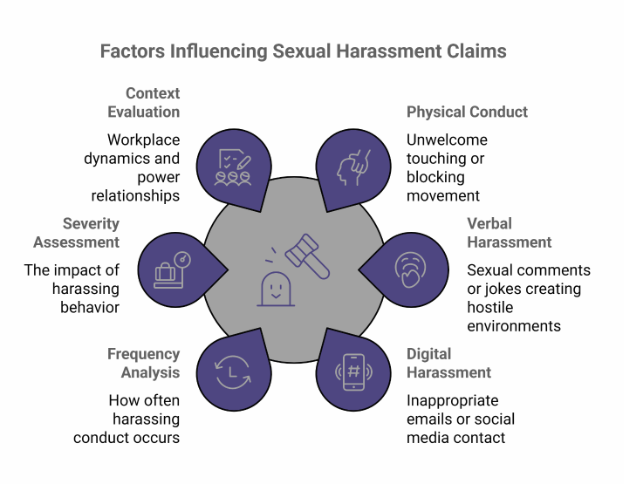
Certain workplace conduct patterns may meet New Jersey’s statutory criteria for sexual harassment claims. Understanding these behavioral categories may assist individuals in assessing whether their experiences potentially constitute legal claims under established state standards.
Please note: Legal interpretations of behavioral patterns may change through court decisions or statutory updates. Current standards require verification through consultation with qualified attorneys and current legal sources.
Physical Conduct
Physical conduct that may meet harassment thresholds includes:
- Unwelcome touching
- Inappropriate physical proximity
- Blocking movement
- Other contact of a sexual nature
New Jersey triers of fact may examine both the nature of physical contact and the context in which it occurs when evaluating potential claims.
Verbal Harassment
Verbal harassment may encompass:
- Sexual comments
- Propositions
- Innuendos
- Jokes that may create unwelcome sexual environments
The state’s legal framework may recognize that verbal conduct can contribute to hostile work environments through cumulative impact even when individual comments might not constitute severe claims independently.
Digital Harassment
Digital harassment through workplace communication systems, including inappropriate emails, messages, or social media contact, may also meet statutory criteria when such conduct may create unwelcome sexual environments or affect employment conditions.
Immediate professional consultation is recommended when workplace experiences involve any of these behavioral patterns, as qualified attorneys can evaluate whether specific conduct meets current legal thresholds and advise on potential courses of action under New Jersey law.
Factors That Triers of Fact May Examine for Recognition of Claims
New Jersey triers of fact may evaluate harassment claims through established analytical frameworks that examine specific factors relevant to potential statutory claims. These considerations may assist in determining whether workplace conduct meets legal thresholds established under state law.
Educational disclaimer: Court analysis methods may evolve through case law developments and procedural changes. This information provides general educational context only and requires verification of current judicial practices.
Frequency Analysis
Frequency analysis may examine how often harassing conduct occurs, with triers of fact potentially recognizing that:
- Isolated incidents could meet claim thresholds if sufficiently severe
- Less severe conduct may require repeated occurrences to establish hostile environments
Severity Assessment
Severity assessment may evaluate the nature and impact of harassing behavior, potentially considering both objective standards of reasonableness and subjective effects on affected individuals. Triers of fact may examine whether conduct would appear problematic to reasonable persons while also considering specific impacts on individuals who allege harassment.
Context Evaluation
Context evaluation may consider:
- Workplace dynamics
- Power relationships
- Environmental factors that could influence the impact of alleged harassment
New Jersey triers of fact may recognize that identical conduct could have different legal significance depending on workplace context and relationship dynamics between involved parties.
Professional legal evaluation is essential for understanding how these factors may apply to individual situations, as qualified New Jersey employment attorneys can assess specific workplace dynamics against current legal standards and provide guidance on evidence preservation requirements.
+——————————————————————————————————-+
💡 Quick Takeaways
- Multi-Factor Analysis: Triers of fact may examine frequency, severity, context, and response patterns when evaluating potential statutory claims
- Individual Assessment: Each situation requires case-specific analysis considering unique workplace dynamics and behavioral patterns
- Professional Evaluation: Complex assessment of potential harassment claims often requires qualified legal analysis for accurate statutory interpretation
+——————————————————————————————————-+
Safety Resources and Immediate Support
Individuals who believe they are experiencing workplace sexual harassment may face safety concerns that require immediate attention beyond questions of legal claims. New Jersey provides resources for those in vulnerable situations who need immediate support or safety planning.
Important safety note: If experiencing immediate physical threats or danger, contact emergency services. Legal consultation cannot address immediate safety emergencies.
The New Jersey Civil Rights Department may offer consultation services for individuals alleging harassment, providing information about rights and resources available under state law. Contact information and current resources are available through official state websites, though services and availability should be verified directly.
Employee assistance programs, workplace safety offices, and human resources departments may provide immediate workplace safety measures; however, individuals should consult with qualified attorneys before relying solely on internal company processes for legal protection.
Professional consultation is particularly important when situations involving alleged harassment involve safety concerns, as attorneys can advise on potential protective measures, evidence preservation, and coordination with workplace safety resources while addressing legal rights under New Jersey law.
When Professional Legal Consultation Becomes Essential
The assessment of potential harassment claims under New Jersey law often involves complex statutory interpretation requiring professional legal analysis. While general information about harassment definitions provides educational context, determining whether specific workplace experiences constitute actionable claims typically requires qualified legal evaluation.
Critical consultation timing: New Jersey harassment claims may be subject to various statutes of limitations that create time-sensitive factors requiring prompt professional evaluation. Delays in seeking consultation may affect available legal options. Current limitation periods require verification with qualified attorneys.
Attorneys specializing in New Jersey employment law can assess individual situations against current statutory criteria, examining behavioral patterns, workplace dynamics, and legal precedent to determine whether experiences meet claim thresholds. Professional consultation becomes particularly valuable when workplace conduct involves subtle power dynamics, ambiguous communications, or complex factual patterns.
Legal counsel can also evaluate potential remedy options under New Jersey LAD, assess current statute of limitations requirements, and provide guidance on evidence preservation requirements. Time-sensitive factors that may affect harassment claims require qualified legal analysis for accurate assessment.
Professional legal evaluation may be especially important when alleged harassment involves:
- Management personnel
- Creates retaliation concerns
- Occurs in complex workplace environments where multiple legal considerations intersect
Qualified New Jersey sexual harassment attorneys can provide a comprehensive assessment of legal options and statutory protections available under current state law.
Consultation is essential because legal advice depends on specific facts and nuances that general information cannot address. Each situation involving alleged harassment involves unique circumstances, workplace dynamics, and legal variables that require individualized professional analysis for accurate assessment under New Jersey’s legal framework.
For current information about New Jersey harassment laws, specific statutory requirements, and official resources, consult the New Jersey Civil Rights Department website, current state statutes, and qualified legal counsel.
Disclaimer: This content is for informational purposes only. This content is not legal advice. No attorney-client relationship is formed through this content. Please consult a qualified attorney in your jurisdiction for legal advice specific to your situation. Laws are subject to change, and legal interpretations may vary based on specific circumstances. All legal standards, timeframes, and procedures require verification with current sources and qualified legal counsel.
🛡️ Empower Your Workplace Rights with Trusted Legal Support
At Zatuchni & Associates, we bring over two decades of experience advocating for employees across New Jersey in sexual harassment and workplace discrimination cases. If you’ve encountered conduct that feels inappropriate or unlawful, you’re not alone—and you don’t have to navigate it on your own.
Contact us today for a confidential consultation with an experienced New Jersey sexual harassment attorney. Let’s discuss your options and protect your rights under the law.
You must be logged in to post a comment.