
📌 Key Takeaways
Promotion Discrimination Requires Immediate Professional Legal Evaluation: Under New Jersey civil rights law, promotion decisions potentially influenced by race—whether through explicit bias or seemingly neutral practices—might constitute concerns requiring immediate consultation with qualified civil rights attorneys rather than workplace acceptance, as legal frameworks are subject to change and require case-specific analysis.
Subjective Criteria May Create Legal Vulnerabilities: Evaluation standards like “leadership potential,” “cultural fit,” or “executive presence” might create opportunities for unconscious or intentional bias to potentially influence promotion outcomes, particularly when patterns suggest potentially discriminatory application requiring professional legal scrutiny and expert evaluation.
Timing Patterns and Documentation Could Indicate Violations: Performance evaluation changes immediately before promotion cycles, disparities in advancement rates between groups, or negative feedback following discrimination complaints might suggest potentially problematic conduct requiring legal analysis, while comments potentially linking race to advancement decisions could provide evidence under civil rights protections.
Retaliation Protections Exist But Demand Professional Navigation: Civil rights law typically includes protections against workplace retaliation for reporting potential discrimination, though the complexity of these situations and potential serious consequences necessitate immediate consultation with qualified legal counsel before taking any action to understand rights and risks.
Evidence Analysis Requires Specialized Legal Expertise: Performance Improvement Plans deployed strategically around promotion decisions, statistical patterns in advancement opportunities, and various forms of documentation require sophisticated legal analysis that qualified civil rights attorneys must conduct through case-specific evaluation rather than general assessment.
The intersection of subjective promotion criteria, evidence patterns, and timing factors creates complex legal considerations demanding specialized professional expertise, as general information cannot substitute for the case-specific analysis required to evaluate potential civil rights violations. This content is for informational purposes only and does not constitute legal advice—individuals experiencing potential discrimination must consult qualified civil rights attorneys for professional guidance on their specific circumstances.
Watching a colleague who is perceived as less qualified receive a promotion can feel deeply personal, particularly when patterns emerge that suggest race may have influenced the decision. For accomplished professionals in New Jersey’s competitive corporate landscape, recognizing when promotion denials cross the line from disappointing business decisions into potential civil rights concerns represents a critical distinction that may warrant immediate professional legal evaluation.
Under New Jersey law, generally speaking, civil rights frameworks may provide protections against race-based discrimination in advancement opportunities. When promotion decisions potentially involve considerations of race, either explicitly or through seemingly neutral practices, these situations might constitute circumstances requiring professional legal analysis rather than workplace acceptance.
Legal frameworks are subject to change, and current statutory provisions should always be verified with qualified civil rights attorneys who can provide case-specific guidance based on the most current legal standards.
+——————————————————————————————————-+
💡 Quick Takeaways
- Legal Framework: New Jersey law generally prohibits race-based promotion discrimination in workplaces.
- Pattern Recognition: Repeated promotion denials involving subjective criteria might indicate concerns requiring professional evaluation.
- Professional Consultation: Documented evidence of potentially discriminatory promotion practices typically necessitates immediate consultation with legal counsel.
+——————————————————————————————————-+
Understanding Promotion Discrimination Under New Jersey Law
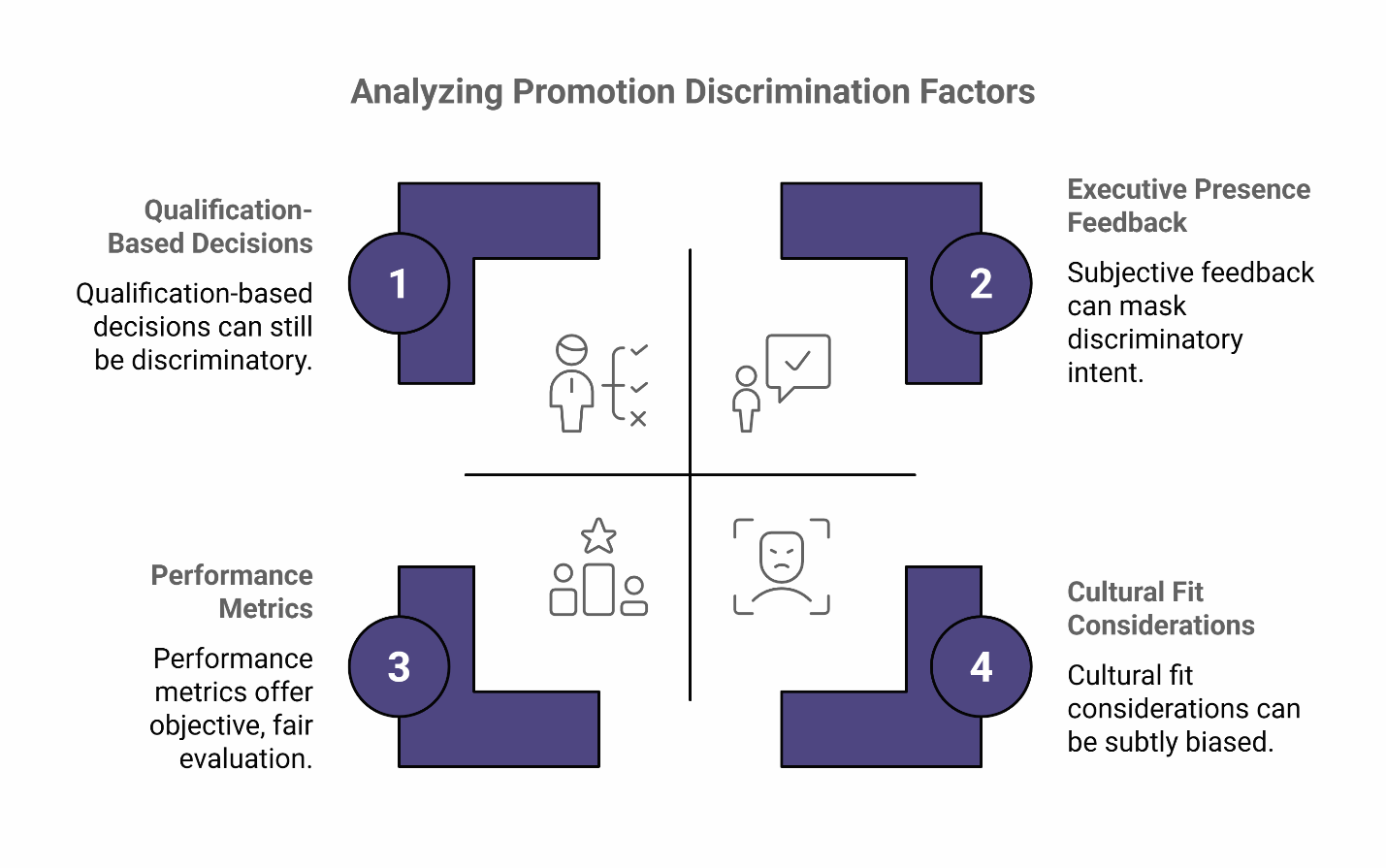
Under New Jersey civil rights law, generally speaking, race discrimination in promotion decisions may encompass situations where an individual’s race potentially becomes a factor—whether explicit or implicit—in advancement determinations. These legal protections typically extend beyond overt discriminatory statements to include practices that might appear facially neutral but could result in a discriminatory impact based on protected characteristics.
Legal frameworks generally distinguish between business decisions based on qualifications, performance, and organizational needs versus decisions that may be influenced by racial considerations. Promotion discrimination may potentially manifest through several patterns that have been identified as legally significant under civil rights protections.
Important Legal Warning: Laws are subject to change, and specific applications of civil rights protections require individual case evaluation by qualified attorneys. This information is for educational purposes only and does not constitute legal advice.
Subjective evaluation criteria often present particular concerns under civil rights analysis. When promotion decisions rely heavily on undefined qualities such as “leadership potential,” “cultural fit,” or “executive presence,” these standards might create opportunities for unconscious or intentional bias to potentially influence outcomes. Legal analysis typically recognizes that subjective criteria, while not inherently problematic, may require careful scrutiny when patterns suggest potentially discriminatory application.
Professional Consultation Is Critical: It is important for individuals experiencing potential discrimination to consult qualified civil rights attorneys for a case-specific analysis of their circumstances, as general information cannot substitute for professional legal evaluation.
[ILLUSTRATIVE EDUCATIONAL EXAMPLE]
Consider a hypothetical corporate environment where two similarly qualified candidates compete for a senior management position. In this educational scenario, one candidate consistently receives positive evaluations but receives feedback about needing to demonstrate “better executive presence.” Legal analysis in such hypothetical situations might examine whether subjective criteria could function as potentially problematic justifications. This hypothetical scenario is for educational purposes only and does not reflect any specific case or individual circumstance.
[END EDUCATIONAL EXAMPLE]
Legal evaluation of potential discrimination situations typically involves examining whether circumstances might establish certain elements, whether employers offer legitimate reasons for decisions, and whether evidence might suggest these reasons could be a pretext for discrimination. Professional legal counsel can assess these complex considerations.
Safety Resource: Individuals concerned about potential retaliation should contact qualified legal counsel immediately, as civil rights laws generally include protections against retaliation for reporting potential discrimination.
Recognizing Patterns That Might Indicate Legal Concerns
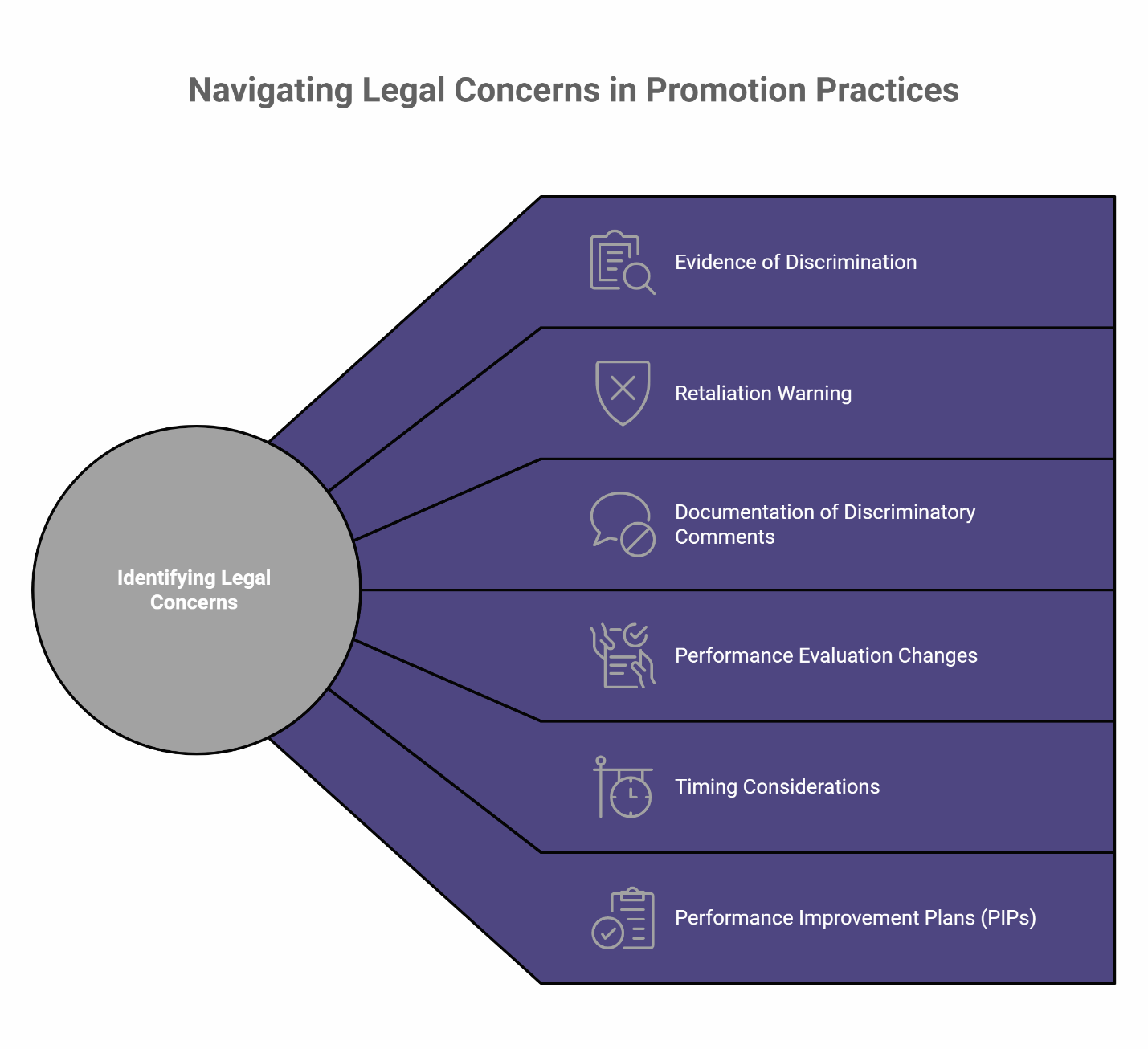
Evidence may play a role in identifying potential issues within organizational promotion practices. When advancement opportunities consistently appear to favor one group over equally qualified candidates from protected classes, these patterns may warrant legal evaluation.
Retaliation Warning: Reporting potential discrimination can sometimes result in workplace retaliation. Civil rights laws typically include protections against such retaliation, but individuals should consult qualified attorneys before taking any action to understand their rights and potential risks.
Documentation of potentially discriminatory comments or conduct surrounding promotion decisions might serve as evidence in certain situations. Comments potentially linking advancement opportunities to racial characteristics, cultural assumptions, or stereotypical expectations about leadership qualities could be used to support a claim of a civil rights violation under applicable law.
Performance evaluation changes represent another area where potential issues might manifest in promotion contexts. When employers suddenly alter evaluation criteria, impose additional requirements, or change historical practices specifically when considering candidates from protected classes, these actions might be indicative of discriminatory decision-making.
Critical Professional Consultation Point: The complexity of evaluating whether workplace situations constitute legal violations requires immediate consultation with qualified civil rights attorneys who possess specialized expertise in analyzing evidence patterns and legal standards.
Timing considerations may reveal potentially discriminatory intent in promotion scenarios. When negative performance feedback emerges immediately before promotion cycles, particularly following an employee’s expression of concerns about workplace treatment, these temporal relationships might suggest conduct requiring legal evaluation.
Performance Improvement Plans (PIPs) in promotion contexts require careful legal analysis. While PIPs may serve legitimate corrective purposes, their strategic deployment immediately preceding promotion decisions or following complaints might indicate a potentially pretextual use requiring professional legal evaluation.
+——————————————————————————————————-+
💡 Quick Takeaways
- Pattern Analysis: Consistent advancement disparities between groups may warrant legal evaluation.
- Timing Concerns: Negative evaluations appearing before promotions or after complaints might indicate retaliation.
- Documentation Importance: Comments potentially linking race to advancement decisions could provide evidence of violations.
+——————————————————————————————————-+
Legal Protections and Potential Remedies
Under New Jersey civil rights law, protections may exist against retaliation for individuals who report or oppose potentially discriminatory promotion practices. Legal frameworks typically prohibit employers from taking adverse actions against employees who file complaints, participate in investigations, or oppose practices they reasonably believe might violate civil rights law.
Laws Subject to Change Warning: All legal timelines, procedures, and protections are subject to change through legislative action or judicial decisions. It is important to verify current requirements with qualified legal counsel.
Legal provisions typically establish deadlines for filing discrimination claims. These timelines may create urgency for individuals experiencing potential violations to seek professional legal evaluation promptly.
Emergency Consultation Requirement: Given potential timing concerns, individuals who believe they may have experienced discrimination should contact qualified civil rights attorneys immediately rather than delay seeking professional guidance.
Available remedies under New Jersey law for proven discrimination violations might include various forms of relief designed to address harm. These potential remedies reflect legislative recognition that promotion discrimination may create lasting professional and personal consequences.
Legal protections may exist at both state and federal levels, potentially providing multiple avenues for legal remedy. The interaction between different legal frameworks creates complex procedural considerations that typically require professional legal guidance to navigate effectively.
[ILLUSTRATIVE EDUCATIONAL EXAMPLE]
Consider a hypothetical situation where a qualified professional reports concerns about potentially discriminatory promotion practices to human resources. In this educational scenario, that individual might subsequently face increased scrutiny, modified responsibilities, or exclusion from advancement opportunities. Legal analysis in such hypothetical situations would examine whether these actions might constitute prohibited conduct under civil rights protections. This hypothetical scenario is for educational purposes only and does not reflect any specific case or individual circumstance.
[END EDUCATIONAL EXAMPLE]
Professional Expertise Essential: The complexity of addressing potentially discriminatory situations in promotion decisions, particularly when employers articulate seemingly legitimate business justifications, underscores why these situations typically require immediate professional legal evaluation.
Resources:
- New Jersey Division on Civil Rights: Official state agency for civil rights concerns
- EEOC: Federal agency handling employment discrimination matters
- Legal aid organizations: For individuals with limited resources requiring legal assistance
- Crisis support resources: If workplace situations create safety concerns
It is critical for individuals experiencing potential promotion discrimination to consult qualified civil rights attorneys for a case-specific analysis, as they cannot rely solely on general information when evaluating their circumstances and legal options.
Frequently Asked Questions
What may constitute promotion discrimination under New Jersey law?
Under New Jersey law, promotion discrimination may involve advancement decisions influenced by an employee’s race. This can range from explicit comments to the use of seemingly neutral practices, such as subjective criteria, that result in a discriminatory impact. Evaluating whether a specific situation constitutes illegal discrimination requires a fact-specific analysis by a qualified civil rights attorney.
How may subjective promotion criteria create potential legal concerns?
When promotions are based on vague standards like “cultural fit” or “leadership potential,” it can allow for unconscious or intentional bias to affect the outcome. If these subjective criteria appear to be applied in a way that disadvantages candidates based on race, it may raise legal concerns. A civil rights attorney can help analyze whether such practices might support a discrimination claim.
Frequently Unasked Questions
What role may Performance Improvement Plans play in a potential legal analysis?
While Performance Improvement Plans (PIPs) can be legitimate tools, their timing can be legally significant. A PIP that is implemented shortly before a promotion decision or after an employee raises concerns about discrimination could be viewed as a pretext for a discriminatory or retaliatory action. An attorney can evaluate the context and timing of a PIP to assess its potential legal implications.
How may evidence support a potential discrimination claim?
Evidence in promotion discrimination cases can include more than just direct comments. Patterns of advancement that consistently favor one racial group over others, sudden negative performance reviews, or statistics showing disparities can all be relevant. An attorney can help determine what information may serve as evidence to support a potential claim.
Conclusion
Individuals experiencing potential promotion discrimination based on race face complex legal considerations requiring immediate professional evaluation. The intersection of subjective promotion criteria, evidence patterns, and timing factors creates sophisticated analysis requirements that qualified civil rights attorneys are equipped to address through case-specific consultation.
Final Safety Warning: Legal proceedings carry serious consequences and potential risks, including possible retaliation. Professional legal representation is often essential for complex civil rights matters, as self-representation in such situations can be challenging.
Disclaimer: This content is for informational purposes only and does not constitute legal advice. No attorney-client relationship is formed through this content. Because laws are subject to change and interpretation, it is essential to consult a qualified attorney in your jurisdiction for advice specific to your situation.
Your Experience Deserves Fair Advancement — We’re Here to Help
At Zatuchni & Associates, we understand how difficult it can be to question whether a promotion denial was about more than just business. With over two decades of experience representing professionals across New Jersey, our firm brings deep legal expertise in handling race-based discrimination cases — including those rooted in subtle, subjective criteria that may mask unfair practices.
If you’re seeing patterns that raise concern or facing sudden changes in evaluations around promotion time, it’s worth asking: could there be more at play? Contact us today to schedule a confidential consultation with an experienced civil rights attorney. Let us help you assess your rights and chart a path forward based on trusted legal guidance.
You must be logged in to post a comment.