
📌 Key Takeaways
In New Jersey whistleblower matters, documentation often matters most when ordinary workplace records, read together, illuminate protected activity, employer awareness, and changed treatment.
- Patterns Beat Single Proof: One decisive record is often less informative than multiple records showing sequence, notice, consistency, or inconsistency across the employment record.
- Report Records Matter: Internal complaints, emails, messages, and policy-linked materials may bear on whether a concern was raised and entered the workplace record.
- Employer Records Matter: Schedules, evaluations, disciplinary write-ups, and assignment changes may bear on whether treatment remained stable or shifted after the report.
- Causal Connection Depends: Timing, changing explanations, and conflicting records may affect whether the overall sequence suggests a potential causal connection.
- Gaps Do Not End It: Missing records do not automatically resolve the matter because ordinary materials may still supply notice, chronology, and surrounding context.
Context turns routine records into a meaningful factual sequence.
New Jersey healthcare professionals concerned about possible whistleblower-related retaliation will gain a clearer framework here, guiding them into the documentation-specific details that follow.
~ ~ ~ ~ ~ ~ ~ ~ ~ ~ ~ ~ ~ ~ ~ ~ ~ ~
A search for a whistleblower attorney in New Jersey often begins with one assumption: evidence must mean one decisive document. In many employment matters, that assumption does not match how the factual record develops. Workplace documentation may carry significance because ordinary records can reflect a report, an employer’s awareness of that report, and a later change in treatment when those records are read together. In healthcare settings, where concerns may be raised through internal channels, chronology and context often matter as much as any single email or memorandum. This New Jersey-focused overview provides general information only, does not constitute legal advice, and laws may change; for current statutory text, official New Jersey sources control.
Under New Jersey Law, Documentation May Bear on Protected Activity, Employer Awareness, and Adverse Employment Action
Under New Jersey law, generally, whistleblower matters are often evaluated through recurring concepts rather than through one dramatic exhibit. The New Jersey Conscientious Employee Protection Act, or CEPA, N.J.S.A. 34:19-1 et seq., often supplies the central statutory framework, subject to current law and official source text. At a high level, the factual inquiry may involve whether an employee engaged in protected activity, whether the employer had awareness of that activity, and whether a materially adverse employment action or another marked change in workplace treatment followed.
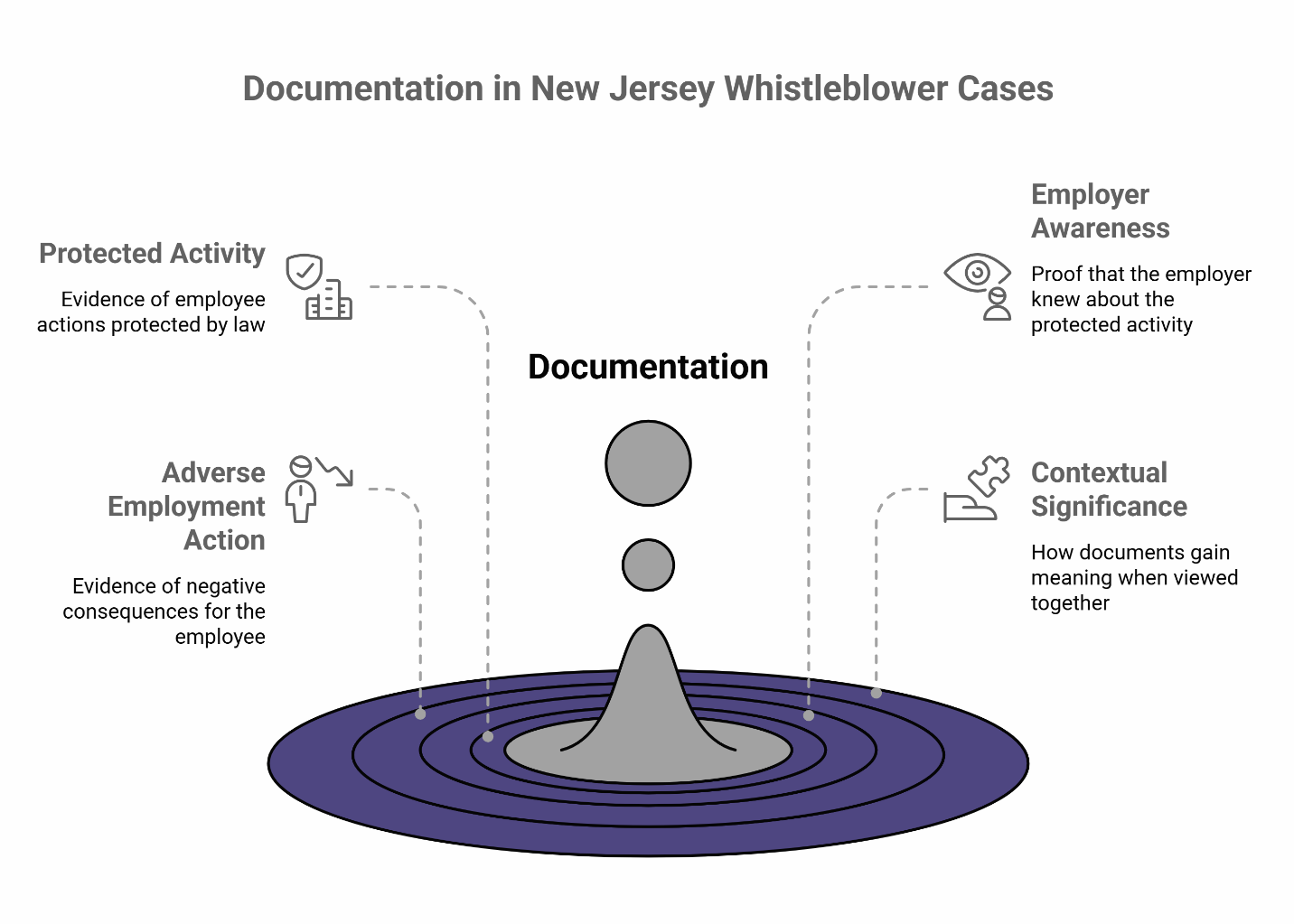
That framework helps explain why a single document rarely resolves the issue by itself. A record may appear routine in isolation. The same record may carry different significance when it is read beside an earlier internal complaint, a policy-related communication, or a later disciplinary measure. A workplace matter may therefore turn less on one “perfect” item and more on whether multiple records, taken together, suggest sequence, notice, consistency, or inconsistency. The legal significance of any one record may depend on specific facts, context, and current law.
Different Record Categories May Illuminate Different Parts of the Same Factual Sequence
Different categories of documentation may illuminate different parts of the same employment sequence.
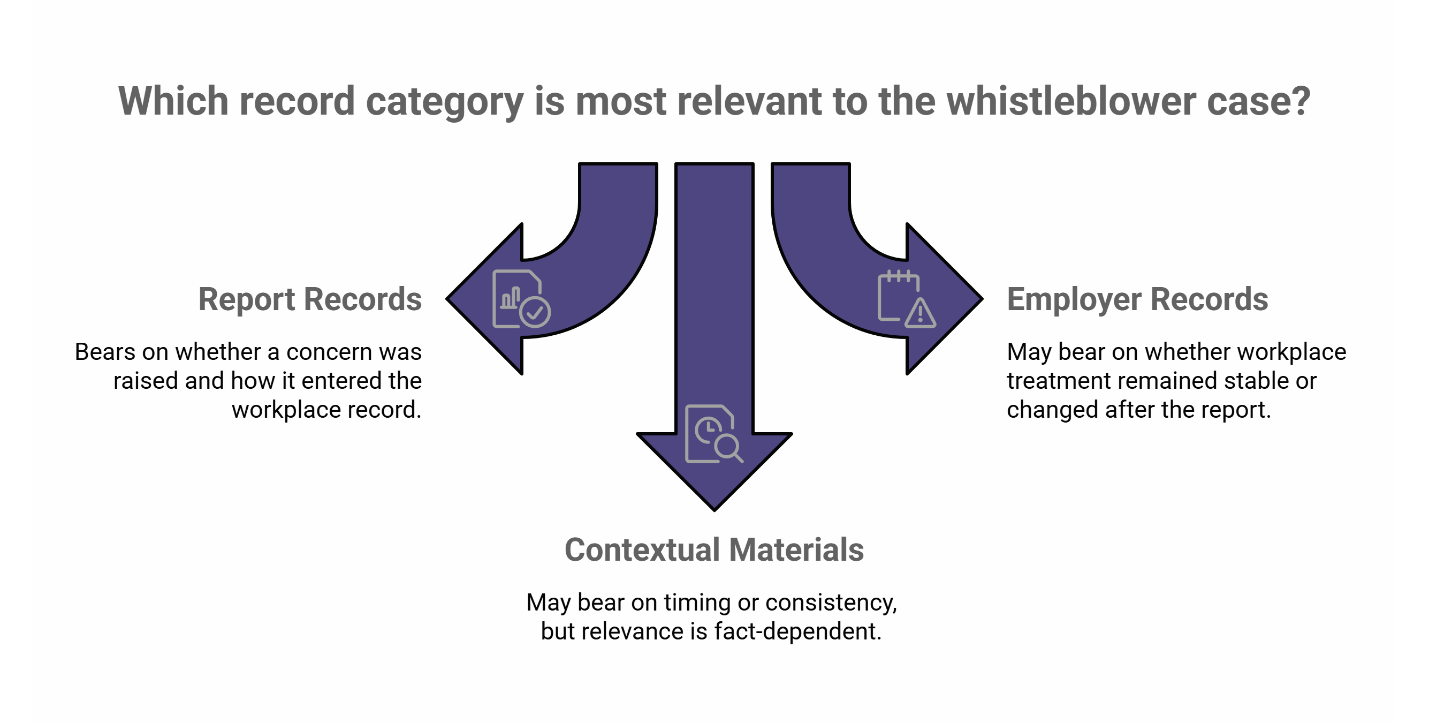
- Records tied to the underlying report, including internal complaints, emails, messages, and policy-linked materials, may bear on whether a concern was raised and how that concern entered the workplace record.
- Employer-created records, including schedules, performance evaluations, disciplinary write-ups, assignment changes, and comparable employment materials, may bear on whether workplace treatment remained stable or changed after the report.
- Contextual materials, including observations recorded close in time and some public-facing online statements, may sometimes bear on timing or consistency, although their relevance may be limited and fact-dependent.
That distinction matters because one set of records may relate to protected activity, while another may relate to employer awareness, stated reasons for an action, or the sequence that followed. An internal complaint may bear on whether a report occurred. A management response may bear on awareness. A later evaluation or disciplinary record may bear on the employer’s stated motivation. When those materials are read together, the trier of fact may be asked to consider whether the overall record reflects continuity, contradiction, or a meaningful change in treatment.
In healthcare workplaces, that pattern may be especially relevant because the initial report and the later employment response may appear in different places. A concern may be documented in one channel, while later schedule changes, write-ups, or supervisory actions may appear in another. For that reason, the factual picture may emerge from several ordinary categories of workplace records rather than from one self-contained file.
Timing, Consistency, and Gaps May Affect Causal Connection
Timing often matters because a record created before or after a report may affect how later events are understood. Consistency often matters because changing explanations, conflicting records, or departures from prior treatment may affect whether the overall sequence appears ordinary or potentially retaliatory. In legal terms, those issues may bear on causal connection, although that assessment remains fact-specific.
Gaps in documentation do not automatically resolve the matter. Employment records are often incomplete, mixed, or created for purposes unrelated to a legal dispute. The absence of one expected record does not necessarily end the inquiry. Ordinary workplace materials may still provide context if they reflect notice, chronology, or a shift in how an employee was treated.
Public-facing online statements may also become part of the surrounding context in some situations. Their role is usually limited and contextual rather than dispositive. They may matter, if at all, because they bear on timing, consistency, or the broader factual sequence, not because online material automatically determines legal significance.
Conclusion
In New Jersey whistleblower matters, evidence often consists of categories of workplace records that may bear on protected activity, employer awareness, adverse employment action, and causal connection, rather than on one decisive document standing alone. Because the legal significance of those records depends on specific facts, current law, and context, readers facing this issue should consult a New Jersey employment attorney for advice about their particular circumstances.
Frequently Asked Questions
What kinds of records may be relevant in a New Jersey whistleblower matter?
Relevant records may include materials tied to the report itself, materials bearing on employer awareness, and materials reflecting a later change in treatment. In general terms, the inquiry often focuses on whether the records, read together, may illuminate protected activity, notice, chronology, consistency, or a materially adverse employment action.
Why can ordinary workplace records matter in a whistleblower-related employment matter?
Routine workplace records may matter because they often preserve timing and context. A schedule change, performance evaluation, or disciplinary write-up may appear ordinary on its own. The same record may carry different significance when it follows a report, conflicts with earlier records, or reflects a marked change in employer treatment.
Frequently Unasked Questions
Can documentation matter even when there is no single decisive record?
Yes. Employment-law matters are often understood through patterns across multiple sources rather than through one definitive exhibit. A sequence of records may reveal more than any single item because the relationship among timing, employer awareness, and later treatment may shape the factual picture.
Can public-facing online activity affect how workplace events are interpreted?
In some situations, yes. Public-facing statements may be reviewed as part of the surrounding context when timing or consistency becomes relevant. Their significance varies, however, and they are usually considered as one contextual piece of the broader workplace record rather than as a stand-alone answer.
Need Help Making Sense of Workplace Records in a Potential New Jersey Whistleblower Matter?
If you are trying to understand whether emails, complaints, schedules, evaluations, or other workplace records may matter in your situation, Zatuchni & Associates is one of the leading employment law firms in New Jersey, with a practice focused on matters such as wrongful termination, race discrimination, sex and gender discrimination, employment protections for military service, and other workplace rights. When you are ready, contact us today to discuss your circumstances and learn more about your options. You can also browse our website to explore more about our New Jersey employment law services.
You must be logged in to post a comment.