
Workplace sexual harassment involving a company owner, executive, senior director, or another influential organizational leader may raise particularly serious concerns when that person has authority over an employee’s working conditions. Unwelcome sexual conduct can create additional pressure when the accused individual also influences an employee’s assignments, compensation, promotion opportunities, or continued employment.
The New Jersey Law Against Discrimination (NJLAD) prohibits workplace sexual harassment. When an allegation involves senior leadership, the accused person’s actual authority, the nature of the conduct, and the surrounding circumstances may affect its legal significance.
A senior leadership title, however, does not independently establish unlawful sexual harassment or employer liability.
Why Sexual Harassment by Senior Leaders Raises Particular Legal Concerns
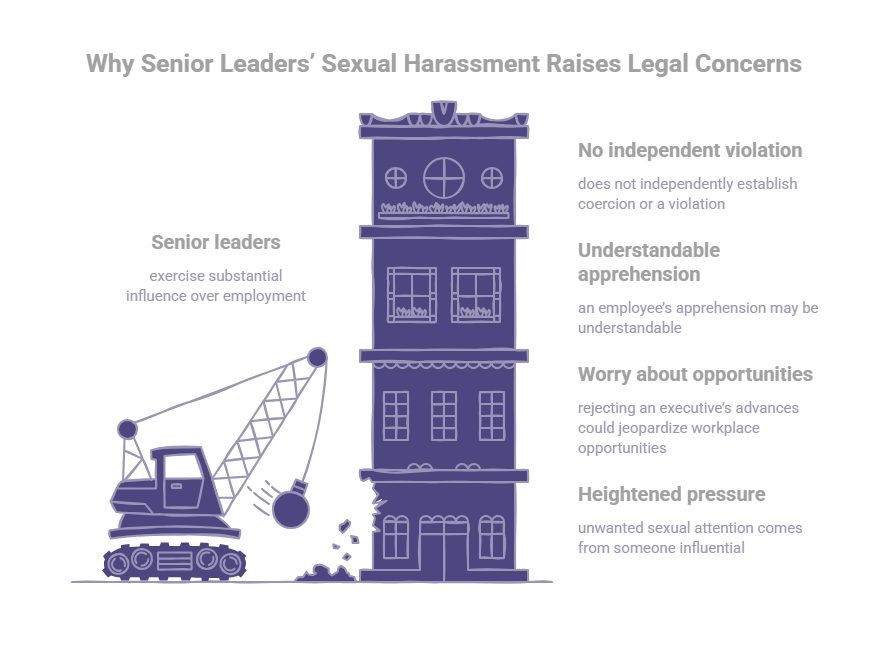
Employees often face heightened pressure when unwanted sexual attention comes from someone who exercises substantial influence over their employment.
For example, an employee might worry that rejecting an executive’s advances could jeopardize workplace opportunities, even without an explicit threat. The concern arises because the executive may possess decision-making authority that affects the employee’s position.
The law distinguishes between an employee’s perceived pressure and an actual employment-related threat. An employee’s apprehension may be understandable, but it does not independently establish coercion or a violation of employment discrimination law.
How Senior Leadership Authority May Affect an Employee’s Working Conditions
An organizational title does not necessarily establish the extent of a person’s authority over an individual employee.
A senior director may oversee several departments without directly supervising every employee. Another organizational leader may have substantial decision-making authority despite having limited daily contact with the affected employee.
Relevant responsibilities may include the following:
- Work assignments and scheduling: A senior leader may determine an employee’s duties, work schedule, or assigned hours.
- Compensation and advancement: An executive may approve pay increases or influence promotion decisions.
- Workplace discipline: A senior official may authorize disciplinary write-ups, demotions, or reassignments.
- Continued employment: A company owner or executive may have authority to make termination decisions.
The extent of this authority can affect the circumstances surrounding unwelcome sexual attention, particularly when the employee depends on decisions made by the accused individual.
Illustrative Example: Unwelcome Sexual Attention From a Senior Leader
A warehouse employee in New Jersey receives repeated, unwelcome requests for romantic involvement from a senior company leader who controls daily shift assignments and influences decisions about which employees are considered for supervisory openings.
The employee worries that rejecting the requests could affect future assignments or promotion opportunities. That concern arises from the leader’s authority over decisions directly affecting the employee’s position.
This hypothetical illustrates employment-related pressure associated with senior leadership authority without establishing that the conduct was unlawful.
The Relationship Between Senior Leadership Authority and Quid Pro Quo Sexual Harassment
Quid pro quo sexual harassment involves situations in which an employer or an employer’s agent connects employment opportunities or consequences to sexual demands.
Under New Jersey law, this may involve conditioning favorable employment treatment on sexual favors or threatening adverse employment action when an employee refuses sexual advances.
For example, a senior executive who conditions an employee’s promotion on accepting sexual advances introduces a connection between sexual conduct and an employment decision.
The executive’s actual authority is relevant because the alleged demand concerns an employment opportunity that the individual may control.
The New Jersey Division on Civil Rights recognizes quid pro quo harassment as a form of sexual harassment prohibited under the NJLAD.
Sexual Harassment by Senior Leaders and a Hostile Work Environment
Hostile work environment sexual harassment concerns unwelcome sex-based conduct that is sufficiently severe or pervasive to alter an employee’s working conditions and create a hostile or abusive environment.
Such conduct may involve unwanted physical contact, repeated sexual advances, or inappropriate sex-based comments.
A senior leader’s authority may influence the circumstances surrounding alleged harassment, particularly when an employee must interact with that individual to perform ordinary job responsibilities.
For example, an employee who receives daily instructions from the accused senior director may have regular workplace contact with that person. Such contact provides relevant context when evaluating the surrounding circumstances.
Unlike quid pro quo sexual harassment, a hostile work environment does not necessarily involve sexual demands connected to a particular employment decision.
The severe or pervasive standard requires consideration of the surrounding circumstances, including the nature, frequency, and severity of the conduct.
Why a Senior Leader’s Actual Authority Matters When Assessing Employer Liability
An employer’s potential liability for workplace sexual harassment may depend partly on the accused individual’s supervisory responsibilities and relationship to the affected employee.
Under the NJLAD, legally relevant supervisory authority may include delegated power to control an employee’s day-to-day working environment.
In New Jersey, the standard for employer liability may often hinge on whether the senior leader is legally considered a “supervisor.” Under guidelines established by the state Supreme Court, an employer could face strict liability if a supervisor’s harassment results in a tangible employment action, such as a firing or demotion.
This authority differs from organizational prominence. An executive may occupy a senior position without directly supervising a particular employee, while another individual may exercise meaningful supervisory control without holding an executive title.
Title VII of the Civil Rights Act of 1964 also addresses workplace sexual harassment and potential employer liability. However, federal law and New Jersey law do not apply identical principles in every circumstance.
The applicable legal assessment therefore depends on the individual’s actual authority and the circumstances of the alleged misconduct. Neither a senior title nor supervisory status automatically determines employer liability.
Why Documenting Alleged Harassment by a Senior Leader May Be Important
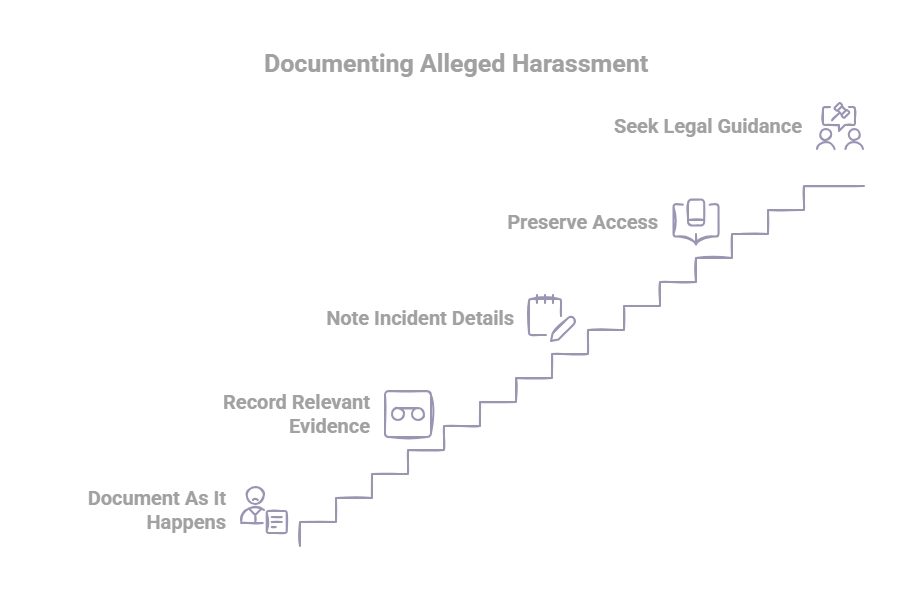
Documenting the harassment as it happens is especially important when the abuser is a senior leader. Senior leaders may have access to internal communications systems, company records, and human resources processes, which can affect the availability of evidence over time.
Documentation that employees sometimes find relevant in these situations may include written communications such as emails, text messages, or voicemails, as well as personal records noting the dates, locations, and circumstances of specific incidents. Storing such records on a personal device rather than employer-provided equipment may help preserve access to them.
Whether and how to document workplace concerns involves individual judgment. An employment attorney can provide guidance on documentation practices that may support a potential legal claim.
Why Employees May Fear Retaliation When the Alleged Harasser Holds a Senior Position
Employees who report or oppose workplace sexual harassment may worry about adverse employment consequences when the accused individual holds substantial organizational influence.
For example, an employee might fear reduced working hours, disciplinary write-ups, reassignment, or termination after reporting unwanted sexual advances by a company executive.
The NJLAD prohibits unlawful retaliation connected to reporting or opposing workplace sexual harassment.
However, anticipated retaliation differs from an adverse employment action allegedly taken because of protected activity. The relationship between an employee’s reporting or opposition and any subsequent employment decision matters to its legal characterization.
Understanding the Importance of Individualized Legal Assessment
Alleged sexual harassment involving senior organizational leaders can present distinct concerns when unwelcome conduct intersects with an employee’s working conditions and employment opportunities.
The legal significance of those circumstances requires individualized assessment. Qualified New Jersey employment counsel can evaluate the situation under applicable employment discrimination law.
Concerned About Sexual Harassment at Work? Let’s Talk Through Your Options
Unwanted workplace conduct can be upsetting, confusing, and difficult to address alone. Zatuchni & Associates helps employees in New Jersey understand whether certain behavior may qualify as unlawful sexual harassment and what options may be available.
If you are in Newark, Jersey City, Trenton, Princeton, Hackensack, Edison, New Brunswick, Elizabeth, or nearby areas, you are welcome to reach out for a Free Case Review.
Contact Us Today to speak with a sexual harassment lawyer and take a calm, informed next step.
You can also connect with Zatuchni & Associates on Facebook or X.
Disclaimer
This content provides general information about workplace sexual harassment under New Jersey employment discrimination law and, where applicable, federal law. It does not constitute individualized legal advice. Employment-law assessments depend on specific circumstances, and applicable laws and legal interpretations may change. Reading this content does not establish an attorney-client relationship.
You must be logged in to post a comment.