
📌 Key Takeaways
Employer responsibility framing under NJLAD often depends on whether alleged retaliation is linked to supervisory authority or coworker conduct and employer knowledge.
- Source Drives Framing: Supervisory authority and agency concepts can make employer attribution feel more direct than coworker conduct, without implying automatic outcomes.
- Good-Faith Belief: Protected activity commonly includes complaints grounded in a good-faith, reasonable belief of NJLAD violation and participation in a complaint-related process.
- Adverse Is Contextual: Adverse treatment is often described as materially negative in context, and retaliation framing remains separate from whether underlying harassment is substantiated.
- Knowledge Shapes Responsibility: Coworker hostility, exclusion, or interference can shift attention to what an employer knew or should have known and the response.
- Timing Rules Differ: Deadlines can vary, with DCR complaints typically subject to a 180-day limit and Superior Court filings generally following two years.
Who acts, what is known, and how events are timed can shape how retaliation concerns are discussed.
New Jersey employees who reported harassment or participated in a complaint-related process will gain clearer framing here, guiding them into the retaliation-focused details that follow.
A harassment complaint can change workplace dynamics in subtle ways and in obvious ways. In New Jersey, it is common for employees to start researching a harassment lawyer in New Jersey when workplace treatment feels different after a report, even if no formal decision is announced. Retaliation discussions under the New Jersey Law Against Discrimination (NJLAD) often focus on a practical distinction: alleged retaliation tied to supervisory authority can raise different employer-responsibility questions than alleged retaliation driven by coworker conduct.
This article provides general information about workplace retaliation concepts under New Jersey’s NJLAD. It is not legal advice and does not create an attorney-client relationship. Laws and interpretations may change, and how they apply can vary by facts. Strict deadlines apply to legal claims; for example, filing a complaint with the New Jersey Division on Civil Rights (DCR) is typically subject to a 180-day limit, whereas filing a lawsuit in the New Jersey Superior Court generally follows a two-year statute of limitations. An attorney can explain which time limits may apply in a particular situation. Any examples are hypothetical and provided only to illustrate concepts.
Understanding Retaliation After a Harassment Complaint Under NJLAD
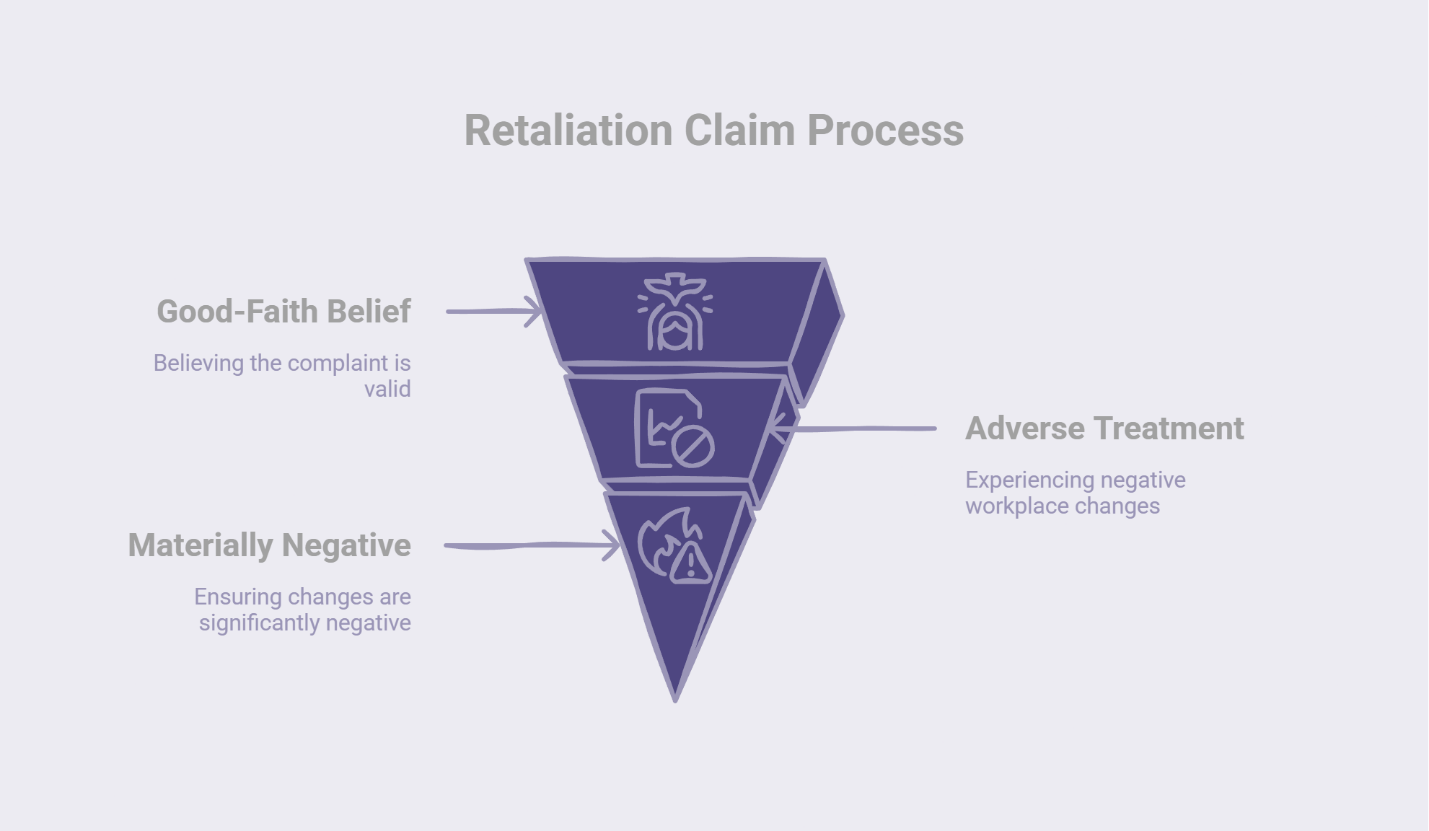
Under New Jersey law, generally, retaliation is discussed as a concept that is distinct from the underlying harassment allegation. Retaliation framing often begins with protected activity, which commonly includes making a complaint grounded in a good-faith, reasonable belief that the complained-of conduct violated the NJLAD—even if the underlying discrimination is not ultimately proven or substantiated—or participating in a complaint-related process. Retaliation framing also commonly considers whether later workplace treatment is described as adverse in an employment sense, meaning the alleged change is characterized as materially negative in context rather than merely unpleasant.
This framing is commonly treated as separate from whether the underlying harassment allegation is substantiated. A workplace can involve contested accounts about the original conduct and also involve a separate dispute about later treatment that is described as connected to reporting or participation.
Key Takeaways
- Retaliation discussions often involve alleged negative treatment connected to protected activity.
- Retaliation framing is commonly addressed separately from whether the underlying harassment allegation is substantiated.
- Whether treatment is described as “adverse” may depend on context and surrounding circumstances.
When Alleged Retaliation Comes From a Manager: Why Employer Responsibility May Be More Direct
Supervisory authority can shape employer-responsibility framing because managers often control, or substantially influence, job conditions. Many legal frameworks treat certain managerial acts as acts of the employer through agency concepts, which can make attribution questions more direct than they may be when the conduct is limited to coworker behavior. Even so, outcomes are not automatic. The framing can vary with workplace structure, decision-making practices, and how the factual narrative is presented by the parties.
Hypothetical example: After an employee reports harassment, a supervisor reassigns key duties and changes schedules while describing the shift as “restructuring.” The employee perceives the change as connected to the complaint and experiences reduced access to meaningful work. The dispute then tends to center on how supervisory authority was exercised and how that conduct is characterized in relation to the protected activity.
Key Takeaways
- A manager’s authority over job conditions can affect attribution and analysis in some situations.
- Supervisor-driven changes can be framed differently from coworker-driven conduct because the source of authority differs.
- Workplace structure and factual context can influence how employer responsibility is discussed.
When Alleged Retaliation Comes From Coworkers: Employer Knowledge and Response Concepts
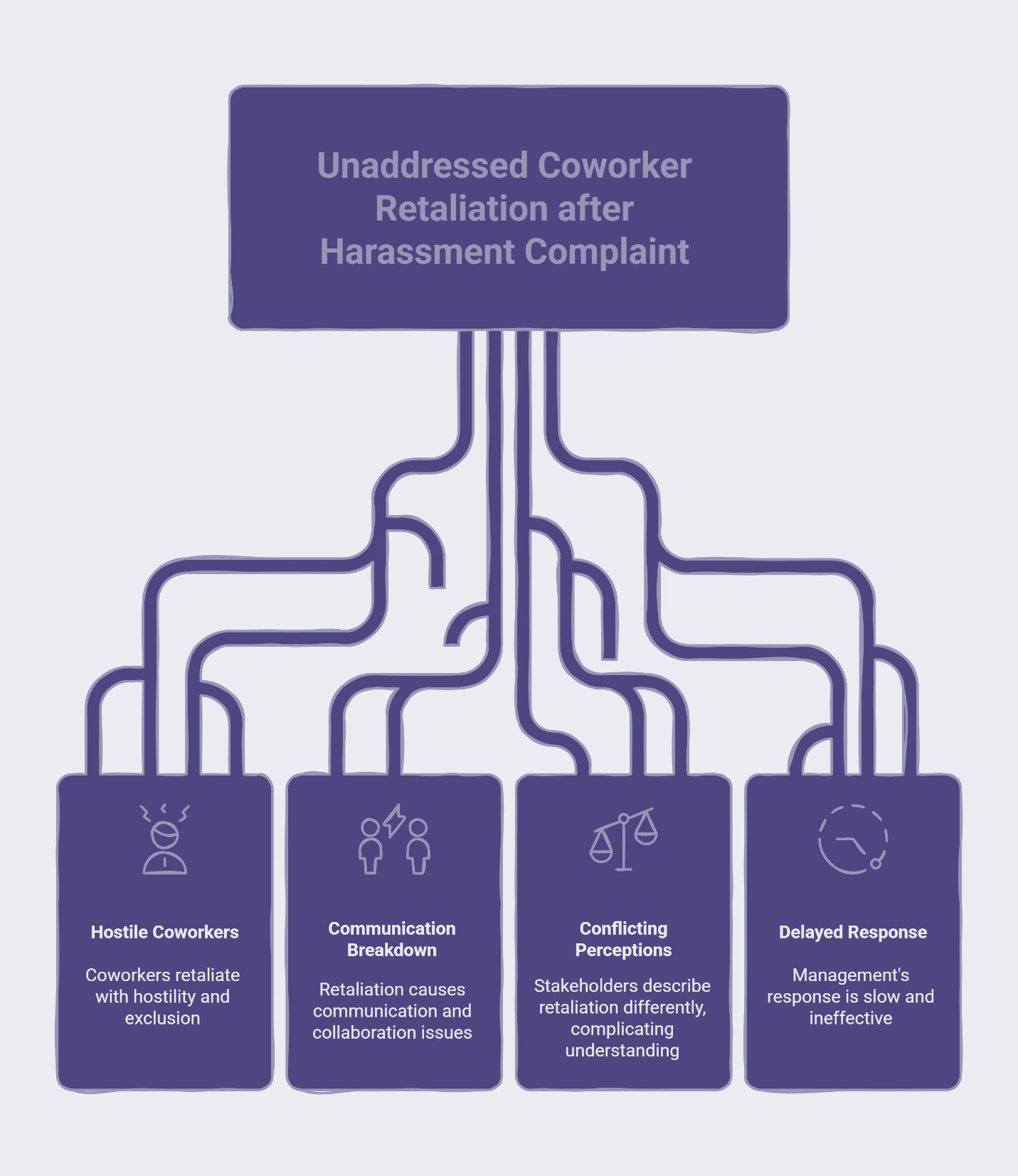
Coworker-driven retaliation allegations often involve changes in day-to-day interactions rather than formal supervisory decisions. Employees sometimes describe hostility, exclusion, or interference with work on shared tasks, including communication breakdowns or workplace tension that affects collaboration and performance. These situations can be described in conflicting ways by different stakeholders, which can complicate how the situation is understood—especially when people are trying to keep doing their jobs while relationships feel strained.
In these scenarios, employer-responsibility framing often centers on what the employer knew or should have known and the nature of the employer’s response. Discussions in New Jersey may use terms such as prompt remedial action to describe responsive measures in general, without treating that phrase as a checklist, a roadmap, or a guaranteed outcome. The significance of a response can depend on context, the information said to be available to management, and how workplace practices operate in real time.
Hypothetical example: After a complaint, coworkers become openly hostile and stop cooperating on shared tasks, which interferes with day-to-day work. Management becomes aware through more than one channel, and the workplace remains tense.
Key Takeaways
- Coworker-driven concerns can raise employer-responsibility questions that differ from supervisor-driven conduct.
- Employer knowledge and response are commonly discussed concepts in this context.
- Interpretations and outcomes can differ depending on the circumstances.
Conclusion
Retaliation disputes under New Jersey’s NJLAD often revolve around a meaningful distinction: alleged retaliation tied to supervisory authority can raise different employer-attribution questions than alleged retaliation carried out by coworkers. Manager-driven conduct may implicate agency concepts and control over job conditions, while coworker-driven conduct often places employer knowledge and response at the center of the discussion. These matters can be fact-sensitive and can carry serious professional and personal consequences for multiple stakeholders, which is one reason accounts of the same workplace events may differ.
Action Steps
Retaliation framing often connects three ideas: protected activity, allegedly adverse treatment, and an asserted relationship between the two. Protected activity commonly includes making a complaint grounded in a good-faith, reasonable belief that the complained-of conduct violated the NJLAD, even if the underlying discrimination is not ultimately proven or substantiated, as well as participating in a complaint-related process. The source of the alleged retaliation can change how employer responsibility is discussed. Supervisory authority can make attribution questions more direct in some settings, while coworker conduct often brings attention to what the employer knew (or should have known) and how the employer responded in the circumstances.
Frequently Asked Questions
Can an employer be responsible if coworkers retaliate after a harassment complaint?
Under New Jersey law, generally, employer responsibility discussions can arise in coworker-driven scenarios when the dispute includes questions about employer knowledge and the employer’s response. Allegations in this setting often focus on whether management became aware of the reported conduct through reports or other channels and what occurred afterward. How those points are characterized can depend on workplace context and the information said to be available at the time.
Does it matter if the retaliating manager was not the person accused of harassment?
The identity of the manager involved in later decisions can affect how a situation is described, but it does not automatically resolve a retaliation question. Retaliation allegations often focus on whether supervisory authority was used in a way that an employee links to protected activity, even when the manager was not the original alleged harasser. The framing commonly remains tied to context, workplace structure, and competing narratives about why decisions were made.
Further Questions (FUQs)
Can retaliation involve workplace exclusion rather than a formal discipline decision?
Retaliation disputes can involve alleged workplace exclusion even when no formal discipline occurs. Some allegations focus on access to work opportunities, collaboration, information flow, or participation in workplace activity. Whether that treatment is framed as materially adverse often depends on how the exclusion is described to affect working conditions in context. Different stakeholders may interpret the same workplace interactions differently, which can influence how the issue is evaluated.
How might social media posts relate to workplace retaliation disputes?
Social media can become part of a workplace retaliation dispute when posts, comments, or messages intersect with workplace relationships or alleged motivations. A post can carry different meanings depending on context, audience, and timing, and disputes may involve competing interpretations of what a message conveyed. Social media content can also complicate workplace narratives by adding external statements to events that are otherwise described through workplace communications.
Additional Resources
For current, official information on discrimination and retaliation concepts, consult the New Jersey Division on Civil Rights (DCR) and the U.S. Equal Employment Opportunity Commission (EEOC), which publish general public guidance. Those sources can help clarify terminology and broad frameworks. Emergency situations require immediate assistance from local emergency services.
Protecting Your Rights Starts with Knowing Where You Stand
At Zatuchni & Associates, we’ve spent years helping New Jersey employees navigate complex workplace challenges, including retaliation after harassment complaints. With deep experience in employment law and a strong track record of results, we understand how difficult it can be when your work environment changes in the wake of speaking up.
If you’re experiencing what feels like retaliation at work — from a manager or coworkers — don’t wait to understand your options. The laws are time-sensitive, and every situation is unique. Contact us today to speak confidentially with an experienced employment attorney who can help you assess your rights under the New Jersey Law Against Discrimination (NJLAD).
You must be logged in to post a comment.