
📌 Key Takeaways
Evidence Categories Under New Jersey Law: Under New Jersey law generally, written communications, witness testimony, and electronic evidence may be considered in sexual harassment cases under the New Jersey Law Against Discrimination (N.J.S.A. 10:5-1 et seq.), though legal significance depends heavily on case-specific circumstances requiring professional evaluation.
Critical Time Constraints: The two-year statute of limitations for a court claim under N.J.S.A. 10:5-13 creates time-sensitive requirements for harassment claims in New Jersey, making immediate attorney consultation essential as evidence preservation becomes more challenging over time and witness recollections may fade.
Complex Legal Standards: Evidence evaluation involves highly technical considerations including power dynamics, frequency of communications, witness credibility, and electronic data authentication that typically exceed general knowledge about harassment law and require specialized legal expertise.
Immediate Professional Consultation Required: Contact a qualified attorney immediately when encountering potential harassment situations, as the complexity of evidence evaluation, procedural requirements, and serious legal consequences make professional legal assessment essential for proper rights protection.
Enhanced Risk Awareness: Social media activity during harassment proceedings carries significant risks as posts may be discoverable and could seriously affect case outcomes, with complete avoidance representing the safest approach requiring attorney guidance.
This comprehensive analysis reveals the intricate legal framework surrounding harassment evidence in New Jersey, providing essential foundation knowledge while emphasizing the critical importance of immediate professional legal consultation for proper case evaluation. This content is informational only and does not constitute legal advice. Consult with a qualified attorney for individual circumstances.
Sexual harassment can create a challenging and unsettling situation. Individuals often seek to understand what may constitute evidence under New Jersey law.
The New Jersey Law Against Discrimination (N.J.S.A. 10:5-1 et seq.) establishes specific frameworks for evaluating harassment evidence. It is important to recognize that not all documentation carries the same legal weight. Some evidence may significantly impact a case, while other materials might prove legally irrelevant.
Understanding evidence categories can assist in navigating this complex legal terrain. However, each situation involves unique circumstances that may affect how the trier of fact evaluates documentation. Professional legal consultation remains essential for proper case assessment under the New Jersey Law Against Discrimination.
+——————————————————————————————————-+
💡 Quick Takeaways
- Written Evidence: Emails, texts, and notes may help establish harassment patterns but require careful legal evaluation
- Witness Testimony: Observer accounts may strengthen cases when properly documented and authenticated
- Electronic Records: Digital communications may offer detailed evidence but involve complex admissibility rules
+——————————————————————————————————-+
Written Communications: The Foundation of Many Cases
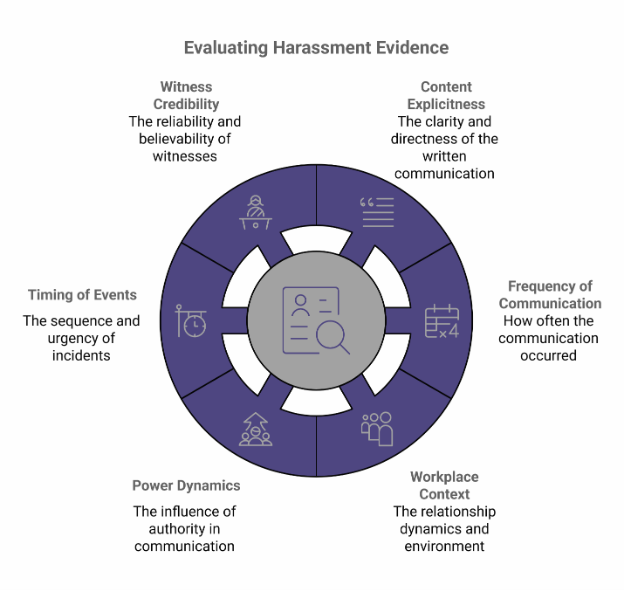
Written evidence can be a foundational component of harassment claims in New Jersey.
Common forms of written evidence include:
- Emails that may contain inappropriate content
- Text messages that may include unwelcome advances
- Handwritten notes that may cross professional boundaries
These materials can provide documentation of conduct that might otherwise become a “he said, she said” situation.
But not every written communication holds equal value. The trier of fact examines several critical factors when evaluating these materials:
- Content explicitness matters significantly
- Frequency creates patterns that strengthen legal arguments
- Context within workplace relationships can either support or undermine claims
Under N.J.S.A. 10:5-1 et seq., the trier of fact in New Jersey specifically evaluates evidence demonstrating unwelcome sexual conduct or hostile work environment creation. A single inappropriate email might not meet applicable legal thresholds. However, a series of unwelcome communications may help establish a persistent pattern that can be considered by the trier of fact for harassment claims.
Power Dynamics and Timing Considerations
The legal landscape becomes more nuanced when examining workplace power dynamics. Messages from supervisors may carry different legal weight than peer communications. Timing also matters; evidence showing escalating behavior may prove more compelling than isolated incidents.
Written materials that may contain sexually explicit language, unwelcome romantic propositions, or professional boundary violations can significantly impact case outcomes. Yet their legal significance may depend heavily on surrounding circumstances, recipient responses, and documented attempts to stop the behavior.
Complex legal standards may govern how the trier of fact evaluates written evidence. Power relationships between parties, communication frequency, and whether recipients clearly expressed unwelcome feelings all may influence legal outcomes. These intricate considerations require immediate attorney consultation, as errors in evidence evaluation can seriously impact potential claims.
Witness Testimony: When Others See What Happened
Witnesses may help transform harassment cases from isolated complaints into substantiated legal claims.
Key witness categories include:
- Coworkers who observed potentially inappropriate behavior
- Supervisors who observed potential harassment effects on individuals
- Employees who overheard comments or conversations that may be considered sexual in nature
These individuals can provide third-party information that may strengthen harassment claims under New Jersey law.
Factors Affecting Witness Value
Witness proximity to events may significantly affect testimony value. Direct observers may carry more legal weight than individuals reporting secondhand information. Specific details about incidents matter more than general impressions or assumptions.
In New Jersey, the trier of fact evaluates witness credibility through multiple lenses:
- Relationship to parties involved
- Consistency with other evidence
- Timing of statements
Witnesses who report incidents immediately may provide stronger testimony than those who come forward months later.
Common Witness-Related Complications
However, witness-related complications frequently arise in harassment cases:
- Some observers may not report observed conduct, which can create gaps in documentation
- Others may face adverse employment actions for speaking out, which could potentially strengthen a case if properly documented
- Witness accounts may sometimes contradict official company records, requiring careful legal consideration to address discrepancies
The legal standards for witness testimony involve complex hearsay rules and relevance requirements. Witnesses generally must have personal knowledge of events they describe. Their observations typically must relate directly to conduct prohibited under N.J.S.A. 10:5-1 et seq.
Professional legal evaluation becomes essential because witness testimony may significantly impact harassment cases. Attorneys can provide guidance on how to prepare witnesses, address credibility challenges, and present testimony in ways that may maximize legal impact while meeting procedural requirements.
+——————————————————————————————————-+
💡 Quick Takeaways
- Documentation Timing: Immediate reporting and evidence preservation may significantly strengthen legal claims
- Pattern Recognition: Multiple incidents across different evidence types may create compelling harassment cases
- Professional Assessment: Complex evaluation standards may require immediate attorney consultation for proper analysis
+——————————————————————————————————-+
Electronic Evidence: The Digital Trail That Tells Your Story
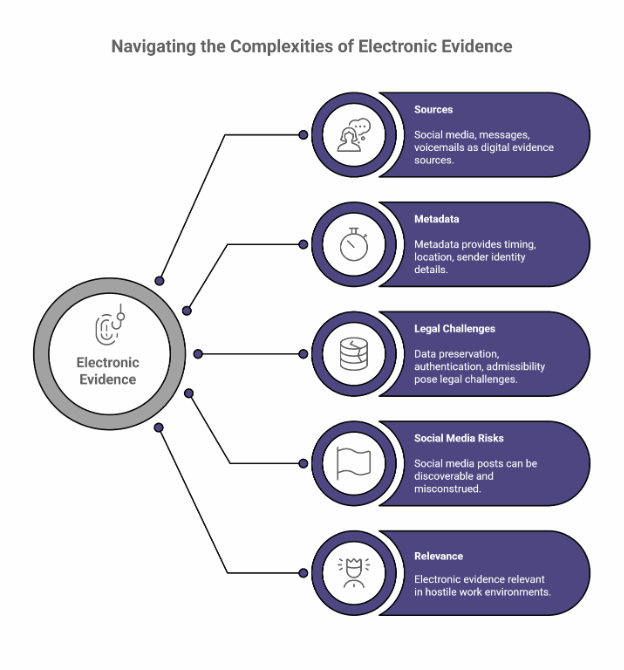
Modern harassment increasingly occurs through digital channels, creating electronic evidence that can support a case.
Digital evidence sources include:
- Social media interactions that may affect workplace relationships
- Instant messages that may contain unwelcome sexual content
- Voicemails that may contain harassing communications
These digital records can provide detailed evidence in harassment cases.
The Value of Metadata
Electronic communications can include metadata, which is information about timing, location, and sender identity. This technical data may help establish crucial case details that can strengthen harassment claims:
- When a message was sent
- The location from which it was sent
- Whether messages were accessed or responded to
Unique Legal Challenges of Electronic Evidence
But electronic evidence presents unique legal challenges:
- Data preservation may require timely action to help prevent automatic deletion
- Authentication involves demonstrating that electronic records have not been altered
- Admissibility depends on meeting specific rules regarding digital evidence presentation
Social Media Risks and Considerations
Social media activity during harassment situations can create significant legal risks:
- Posts may be discoverable during legal proceedings
- Comments might be taken out of context
- Private messages may not remain private in legal disputes
Avoiding social media entirely may be a prudent approach when dealing with harassment situations. Anything posted online can potentially affect case outcomes, regardless of privacy settings or intended audience.
When Digital Evidence May Be Relevant
Digital evidence may be relevant in situations where:
- Electronic communications contribute to hostile work environments
- Social media activity affects workplace relationships
- Electronic records contradict official company accounts
Legal significance may depend on authenticity, relevance, and connection to workplace harassment.
The trier of fact in New Jersey may consider various electronic evidence forms when evaluating harassment claims. However, admissibility standards can involve complex technical and procedural requirements that may demand specialized legal expertise. Digital communication technologies evolve rapidly, making electronic evidence evaluation an area where qualified attorneys can provide guidance.
The Critical Importance of Immediate Legal Consultation
Evidence evaluation in New Jersey sexual harassment cases often requires specialized knowledge that may exceed general legal understanding.
Key complexity factors include:
- Each evidence category may involve specific legal standards
- Procedural requirements may vary by case type
- Evaluation criteria may change based on individual circumstances
These complexities can make immediate attorney consultation essential for individuals dealing with harassment situations.
Time-Sensitive Considerations
Time matters in harassment cases:
- New Jersey’s two-year statute of limitations under N.J.S.A. 10:5-13 establishes deadlines for legal action
- Evidence preservation can become more challenging as time passes
- Witness recollections may fade
- Digital records may be deleted
Professional Legal Assessment
Qualified attorneys specializing in New Jersey harassment law can provide:
- Case-specific analysis of evidence significance
- Assessment of compliance with procedural requirements
- Evaluation of potential claim strength under N.J.S.A. 10:5-1 et seq.
It is advisable to seek legal counsel without delay. Delays may result in lost legal rights and unavailable remedies. Harassment case consequences can be serious and may have long-lasting effects for everyone involved.
Frequently Asked Questions
What factors may contribute to the legal significance of evidence in New Jersey harassment cases?
Evidence significance may depend on relevance to prohibited conduct under N.J.S.A. 10:5-1 et seq., admissibility under applicable rules, and connection to workplace harassment. Legal evaluation standards can involve complex considerations that may require professional assessment. Individuals should contact an attorney for evidence evaluation in harassment matters.
When might individuals consider consulting a harassment attorney about evidence matters?
Prompt consultation is generally advisable. This may be considered when encountering potential harassment situations, needing evidence significance evaluation, or facing questions about legal rights under the New Jersey Law Against Discrimination. The two-year statute of limitations and evidence evaluation complexity can make prompt consultation essential for rights protection.
Frequently Unasked Questions
Why might prompt evidence recognition be important in harassment cases?
New Jersey’s two-year statute of limitations establishes time-sensitive requirements. Evidence preservation can become increasingly difficult over time. Witness recollections may fade. Early recognition can allow timely professional evaluation and appropriate legal response under New Jersey harassment law.
How might social media activity relate to harassment evidence?
Social media communications may constitute evidence when involving workplace relationships or affecting professional environments. However, social media activity during legal proceedings can carry significant risks. Posts may be discoverable and could seriously affect case outcomes. Avoiding social media entirely during harassment situations may be a prudent approach.
Disclaimer: This content is for informational purposes only. This content is not legal advice. No attorney-client relationship is formed through this content. Please consult a qualified attorney in your jurisdiction for legal advice specific to your situation.
Schedule a Confidential Consultation with Zatuchni & Associates
At Zatuchni & Associates, we understand that taking the first step toward legal support can feel overwhelming. If you’re dealing with workplace harassment, you don’t have to face it alone. Our team focuses on employment law in New Jersey—including sexual harassment cases—and we’re here to offer clear guidance tailored to your situation.
If you’re curious about your options or want to better understand your rights, we invite you to browse our website and learn more about how we approach these sensitive and important matters.
When you feel ready, contact us today to speak with an experienced sexual harassment lawyer. Your concerns will be treated with respect, discretion, and professionalism.
Stay connected with us:
🔹 Facebook
🔹 X (Twitter)
You must be logged in to post a comment.